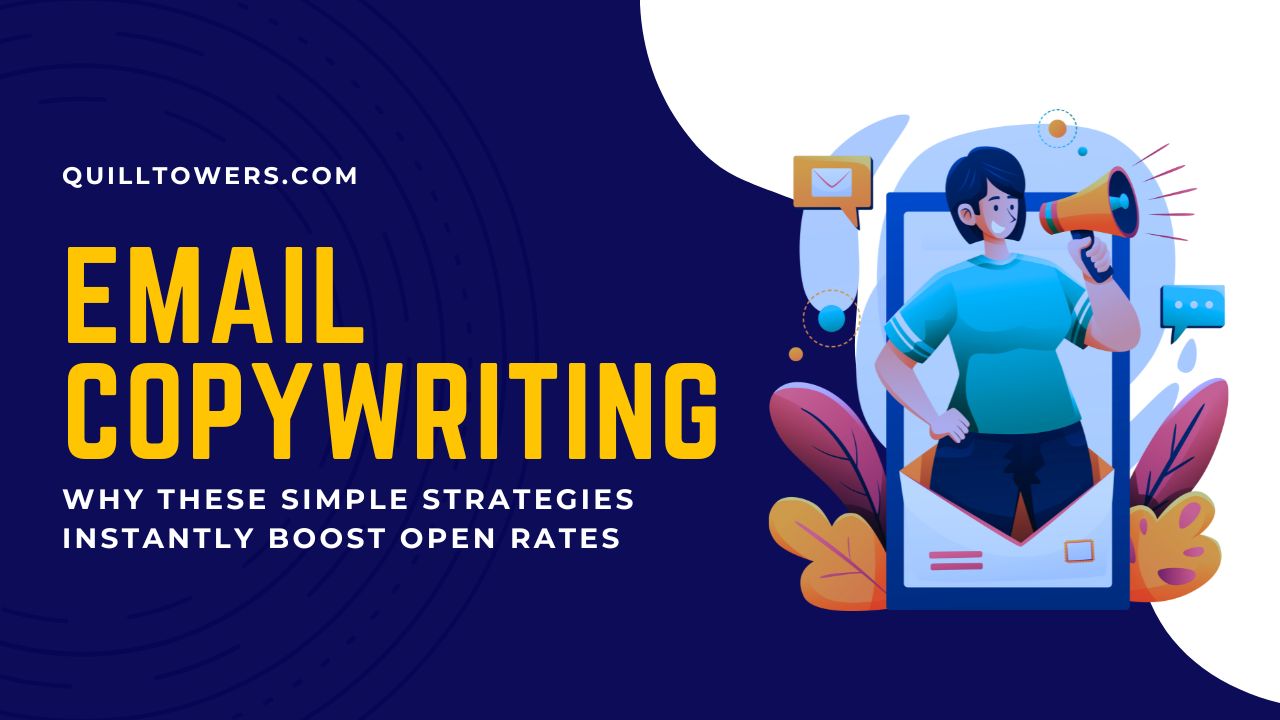
Email Copywriting: Why These Simple Strategies Instantly Boost Open Rates
Email copywriting is the quiet persuader, the velvet rope that decides who gets in and who walks past without a glance.
In a world where inboxes are bursting at the seams, email copywriting isn’t about shouting louder; it’s about whispering the right thing at the right moment.
Envision it like striking a match in the dark. One spark of curiosity, relevance, or emotion is often all it takes to light up an open.
The truth is, people don’t open emails because they’re bored. They open them because something tugs at their brain, an unanswered question, a personal cue, a familiar name, or the faint fear that they might miss out on something that matters.
Great email copywriting understands this instinctive pull. It doesn’t chase attention; it earns it.
And once you understand what the human brain is secretly craving, knowing these psychological triggers helps you craft email copywriting that consistently increases open rates and engagement.
The first spark is lit. Here’s how to make it catch fire.
The Email Copywriting Curiosity Gap: Why Your Brain Craves It
At its core, high-performing email copywriting isn’t about clever turns of phrase or flashy subject lines.
It’s about psychology. People don’t open emails simply because they exist in their inbox; they open them because something in the subject line or preview text feels relevant, intriguing, or quietly valuable.
This is where effective email copywriting works like a movie trailer. It doesn’t give away the whole plot. It reveals just enough to make the brain lean forward.
This brings us smoothly to the first psychological lever every skilled email copywriter should master: mystery, which sparks curiosity and makes your audience feel intrigued and eager to learn more.
Why Mystery Drives Email Opens
The human brain hates loose ends.
When a subject line creates a small information gap, hinting at a benefit without spelling it out, it triggers an almost involuntary urge to find the answer.
Read more: Master SEO Copywriting: Power Up Your Brand Growth
This principle, often called the information gap theory, explains why curiosity-driven email copywriting consistently boosts open rates.
The trick isn’t being vague for the sake of it; it’s being specific without being complete.
For example:
- “You’re making this email mistake.”
- “Most marketers miss this one detail.”
- “This changed how we write email copywriting forever.”
Each line plants a question mark in the reader’s mind. And once curiosity takes hold, opening the email feels less like a choice and more like scratching an itch.
As curiosity sets the stage, relevance steps into the spotlight.
Why “This Was Meant for You” Wins Opens
Relevance isn’t just a marketing buzzword; it’s a psychological shortcut that signals to readers that the email is tailored to their interests, past behavior, or preferences, making it more likely they’ll open it.
Effective email copywriting uses personalized elements such as intelligent segmentation, behavioral triggers, and language that genuinely reflect the reader’s own words, making your audience feel truly understood and valued.
Effective email copywriting uses:
- Smart segmentation.
- Behavioral triggers.
- Language that mirrors the reader’s own words.
When correctly done, the reader doesn’t think, “This brand is emailing me.” They think, “They get me.”
And once relevance is established, trust becomes the deciding factor.
Familiar Brands Get Opened First, Here’s Why
Trust is the invisible ink in successful email copywriting.
Psychological studies consistently show that people are more likely to engage with messages from sources they recognize and trust.
That trust is built over time through:
- A consistent sender name.
- Predictable value delivery.
- Clear, honest expectations.
When used correctly, the reader doesn’t think, “This brand is emailing me,” but instead feels reassured and confident, sensing that your emails are credible and trustworthy.
Once trust is in place, emotion becomes the accelerant.
How FOMO Turns Subject Lines Into Click Magnets
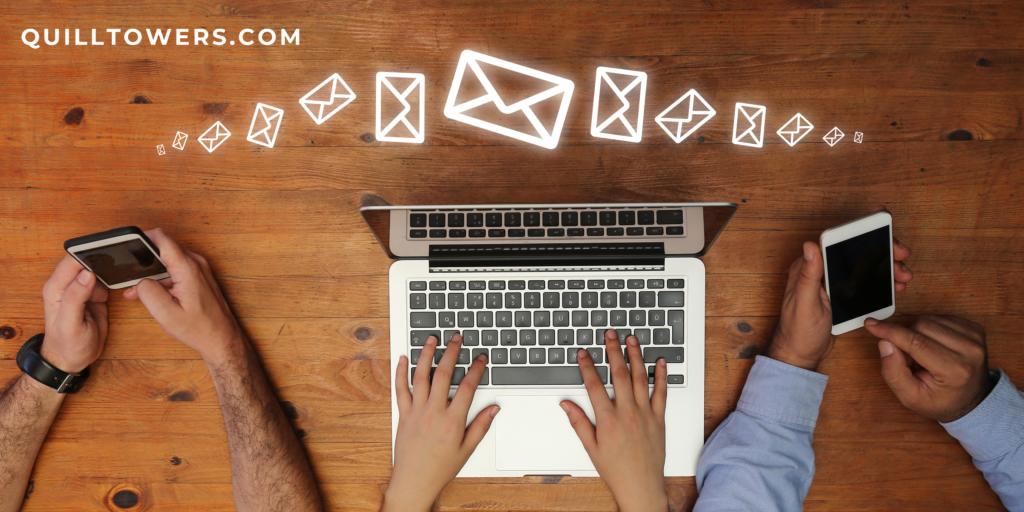
Emotion drives action faster than logic ever could.
In email copywriting, few feelings are as powerful as urgency and exclusivity.
Phrases like:
- “Last chance.”
- “Limited spots available.”
- “Only for subscribers.”
Tap into the fear of missing out.
They suggest that waiting has a cost, and that the brain is hardwired to avoid loss.
When urgency is paired with a genuine promise of value, email copywriting transforms subject lines into click magnets.
The reader opens not out of panic, but out of possibility.
Of course, urgency works best when value is already on the table.
Give Value, Get Opens: The Reciprocity Effect
People are far more inclined to open emails when they believe they’ll receive something meaningful in return.
This is the principle of reciprocity at work.
High-impact email copywriting leads with value:
- Actionable insights.
- Exclusive content.
- Useful resources.
- Timely opportunities.
When readers consistently gain something from your emails, opening them becomes a habit.
They don’t wonder if it’s worth their time; they already know it is.
And that’s when open rates stop fluctuating and start compounding.
Why This All Works Together
In the end, email copywriting that taps into curiosity, relevance, trust, emotion, and value speaks the same language the human brain uses to prioritize information.
Each element reinforces the next, creating a smooth psychological pathway from inbox to open.
When your emails feel intriguing but trustworthy, personal but valuable, urgent but respectful, readers don’t hesitate; they open.
And once that habit is formed, your inbox presence stops feeling like noise and becomes an invitation, one they’re quietly excited to accept.
The Inbox Battlefield: Winning the First Micro-Second
Before a reader thinks, before they reason, before they decide, their brain scans.
The inbox is less a reading space and more a racetrack, where subject lines sprint past at full speed.
On this battlefield, email copywriting doesn’t get minutes, let alone seconds. It gets a blink.
That first microsecond is where attention is either captured or lost forever.
And the brands that win aren’t louder, they’re sharper.
They understand how to slip past mental filters, interrupt scrolling habits, and spark a feeling before logic has time to interfere.
This is where strategy meets instinct, and where great email copywriting proves its worth, which brings us directly to the emotional edge.
Connect, Excite, Open: The Emotional Edge
Emotion sits in the driver’s seat of decision-making, and inbox behavior is no exception.
People don’t open emails because they’ve analyzed them; they open them because something feels right, urgent, exciting, or intriguing.
Effective email copywriting uses subject lines that tap into:
- Excitement (“This changes how you write emails”)
- Curiosity (“Most people miss this email trick”)
- Urgency (“Ends tonight”)
- Light delight (“We tried this so you don’t have to”)
Subject lines that promise value or spark a positive emotional response consistently outperform dry, announcement-style lines.
After all, emotion is the hook; logic justifies the click afterwards.
Once emotion grabs hold, attention still needs to be protected. That’s where pattern disruption comes in.
Disrupt the Scroll, Get Clicks
The human brain is a pattern-recognition machine.
It scans inboxes, filtering out what looks familiar, repetitive, or predictable.
Unfortunately, most subject lines blend into the background like wallpaper.
Smart email copywriting introduces a pattern break, something unexpected yet relevant that makes the brain pause.
This could be:
- A thoughtful question.
- An unusual word choice.
- A playful twist on a familiar phrase.
- A format shift, like a short sentence followed by a dash.
The goal isn’t to confuse, it’s to interrupt autopilot.
When a subject line breaks the visual or linguistic rhythm of the inbox, it earns a second look.
And in email, that second look often becomes an open.
But attention alone isn’t enough. The reader still needs a reason.
Answer “What’s in It for Me?” Instantly
Every inbox decision comes with an unspoken question: Why should I care?
The best email copywriting answers that question before it’s fully formed.
Read more: Ad Copy Tips: 15 Secrets to Skyrocket Your PPC Conversions
Strong subject lines make the benefit clear:
- A practical takeaway.
- A useful insight.
- A specific outcome the reader wants.
Vague phrasing that sounds generic or salesy gets ignored.
Clear, benefit-driven language earns trust and opens. When readers instantly understand what they gain, hesitation disappears.
As clarity sharpens the message, brevity sharpens its impact.
Trim the Words, Drive the Opens
In a mobile-first world, long subject lines often die halfway through the sentence.
If your value is buried under extra words, it never reaches the reader.
High-performing email copywriting favors clarity over cleverness and brevity over fluff.
Short, focused subject lines communicate value quickly, especially on small screens where every character counts.
Strip it down to packing for a carry-on. If it doesn’t serve a purpose, it doesn’t cut.
And yet, a great email strategy isn’t built on instinct alone.
Where Creative Meets Data-Driven Email Wins
The strongest email copywriting lives at the intersection of creativity and evidence.
Clever subject lines grab attention, but data ensures they perform.
By combining:
- Emotional triggers.
- Personal relevance.
- A/B testing.
- Behavioral insights.
You move beyond guesswork.
Each test refines your understanding of what your audience responds to, and why.
This balance ensures your subject lines don’t just look good on paper. They work in real inboxes, with real people, making real decisions in real time.
The Big Picture
When emotional triggers, clarity, pattern breaks, and relevance work together, attention turns into action.
Subject lines stop competing for space and start commanding it.
This is the power of strategic email copywriting, not forcing opens, but earning them at first glance.
In an inbox crowded with noise, your message doesn’t need to shout. It just needs to hit the right nerve at the right moment.

Ditch the Tokens: Email Copywriting That Personalizes Like a Human
At its heart, effective email copywriting doesn’t sound like a machine checking boxes or running scripts in the background.
It sounds like a real conversation, one person speaking to another with clarity, warmth, and intent.
In an inbox crowded with automation and noise, that human touch is what turns a lukewarm message into one that feels thoughtfully crafted and genuinely welcome.
When email copywriting feels human, readers don’t brace themselves for a pitch. They lean in.
And that’s where personalization stops being a tactic and becomes a relationship.
Go Beyond Name Tokens
Personalization doesn’t begin and end with dropping a first name into the subject line.
While that’s a polite hello, it’s rarely enough to make someone feel understood.
High-impact email copywriting uses personalization to signal relevance, not just recognition.
It shows the reader that you know why they’re here, not just who they are.
True personalization might include:
- Content tailored to a reader’s interests.
- Messaging shaped by past behavior.
- Offers aligned with where they are in their journey.
When correctly applied, the email doesn’t feel processed; it feels intentional. And intention is what builds trust.
That trust deepens when your language shifts from broadcast to conversation.
Speak to Your Reader, Not the Masses
One of the quickest ways to kill engagement is to write as if everyone is reading.
Great email copywriting does the opposite; it writes as if only one person is listening.
To make an email feel individualized:
- Segment your audience by interests, behaviors, or preferences.
- Reference relevant experiences, such as a product they viewed or an event they joined.
- Use dynamic content that adapts to the reader while maintaining the core message.
This approach transforms an email from a mass send into a personal note.
The reader doesn’t think about how many others received it; they think about how closely it speaks to them.
But personalization isn’t just about data. It’s also about tone.
Engage With Human-Touch Email Copywriting
Automation often strips emails of warmth. Templates default to stiff phrasing. Bots tend to use safe, generic language. Humanized email copywriting breaks that pattern.
It:
- Uses simple, conversational language.
- Sounds natural, not overly polished or robotic.
- Reflects empathy and awareness of the reader’s situation.
The goal is familiarity. Your email should come from someone who understands the reader’s challenges and respects their time, not a system firing off another sequence.
When readers feel that care, they respond with attention.
From Spam Folder to Spotlight: Relevant Content Wins
Relevance is the bridge between personalization and performance.
Data consistently shows that emails tailored to individual readers, through segmentation, behavior-based triggers, or dynamic content, earn higher open and click-through rates.
Why? Because people trust messages that feel relevant.
And trust is what keeps emails out of the trash and in the spotlight.
Read more: Unlock High-Impact Copywriting That Converts
Strong email copywriting uses data not to overwhelm, but to clarify.
It filters information through empathy, turning insights into messages that resonate instead of being recycled.
Why Human Personalization Works
In the end, email copywriting that feels personal doesn’t rely on surface-level tricks.
It uses data to listen, language to connect, and relevance to earn attention.
When your emails feel sincere, thoughtful, and grounded in fundamental understanding, they stop feeling like marketing.
They start feeling like messages worth opening and worth remembering.
Format Is the Ultimate Conversion Lever
The hard truth? Most people don’t read emails.
They skim them the way drivers skim road signs, quickly, selectively, and with one goal in mind: Is this worth my attention right now?
That’s why email copywriting built for quick comprehension isn’t a nice-to-have.
It’s survival.
In the inbox, format isn’t decoration. Its direction.
Clean structure tells the reader where to look, what matters, and what to do next, without making them work for it. And when effort drops, engagement rises.
Structure Your Way to Readership
Well-structured email copywriting works like a well-lit path: It guides readers forward rather than forcing them to bushwhack through dense text.
Research consistently shows that scannable content, clear sections, short blocks of text, and generous spacing help readers understand messages faster.
A cluttered email feels heavy before it’s even read. A clean layout feels inviting, almost effortless.
To make your emails easier to absorb:
- Use short paragraphs (no more than 2–3 lines)
- Break key points into bullet lists or numbered steps.
- Add headings and subheadings to organize ideas logically.
- Leave generous white space so important messages stand out.
This structure allows readers to grasp your value in seconds, long before distraction pulls them away.
Once the structure is in place, space does the quiet work of guiding attention.
Give Your Eyes a Rest: Space It Out
Whitespace isn’t empty. It’s intentional. In email copywriting, space is what gives your words room to breathe.
Strategic spacing between paragraphs, around buttons, and beneath headlines reduces visual fatigue and improves comprehension.
Instead of overwhelming the reader, whitespace creates pauses, moments where meaning lands before the eye moves on.
More importantly, whitespace naturally guides attention toward your call to action.
When everything isn’t competing for space, the most critical element stands out without shouting.
With clarity established, the next goal is flow.
No More Wandering Eyes
Readers shouldn’t have to guess where to look next.
Strong email copywriting uses visual hierarchy to create momentum.
Larger headings signal importance. Bold text highlights key ideas.
Clear separation between sections mirrors how people read in real life, from the headline to the detail, from the promise to the proof.
When your email flows logically, the reader doesn’t drift.
Their eye moves exactly where you want it to go, step by step, until the action feels like the natural conclusion.
That clarity becomes even more powerful when paired with restraint.
Edit Ruthlessly: Only Value-Driven Content Makes the Cut
Attention is a limited currency.
Every extra sentence, graphic, or flourish competes for it.
High-performing email copywriting respects that limitation by stripping emails down to what matters most.
Each section should communicate one clear idea. Visual elements should support the message, not steal focus.
This matters even more on mobile, where most emails are opened, and every inch of screen space counts.
Simplicity isn’t minimalism for its own sake; it’s empathy for the reader.
Why Format Drives Action
In the end, email copywriting that honors how people actually read doesn’t just feel better, it performs better.
Scannable structure, thoughtful spacing, and clear hierarchy reduce cognitive friction and make value immediately visible.
When readers quickly understand your message, they’re far more likely to act on it.
And in a crowded inbox, that ease of understanding is often the difference between being skimmed and being clicked.
The Open Rate Report Card
Email copywriting is not a one-and-done craft; it’s a living, breathing system.
The strongest email strategies aren’t built on gut feeling alone; they’re shaped by attention to data.
Every open, scroll, and click leaves behind a trail of insight, quietly showing you what’s working, what’s slipping, and where opportunity lives.
Read more: Screenwriting Collaboration Mastery: Dos & Don’ts for Co-Writing Success
When you treat performance data as feedback rather than judgment, email copywriting evolves.
Intuition sharpens. Decisions get smarter. Results compound.
The Secret to Better ROI: Consistent Split Testing Wins
A/B testing, also known as split testing, is one of the most dependable ways to improve email copywriting performance over time.
Instead of guessing, you let the audience vote with their behavior.
By sending two variations of an email to small segments of your list, you can see which version earns more opens or clicks before scaling it to the rest of your audience.
Elements worth testing include:
- Subject line phrasing and length.
- Emotional versus straightforward language.
- CTA copy (“Get the Guide” vs. “Download Now”)
- Email length and structure.
Over time, these microtests reveal macro patterns.
You begin to see what your audience responds to instinctively, removing guesswork from your email copywriting strategy and replacing it with clarity.
Once testing sharpens your message, open rates become your next signal.
Win the Inbox War
Open rates are an early report card for email copywriting effectiveness.
While they don’t tell the whole story, they reveal whether your subject lines and sender identity are earning attention in crowded inboxes.
Consistent analysis of open rates helps uncover:
- Which subject-line styles resonate most?
- Optimal send times.
- Fatigue caused by frequency or repetition.
When open rates dip, it’s rarely random.
It’s usually a cue to refine:
- Subject-line clarity.
- Relevance and personalization.
- Timing and cadence.
Listening to these signals allows email copywriting to adapt before performance slips too far.
But opens only tell you who showed up.
Engagement tells you who stayed.
The Scroll-Depth Secret
Beyond opens and clicks, deeper engagement data reveals how readers actually interact with your message.
Scroll depth, link activity, and conversions expose where attention spikes, and where it fades.
Analyzing this behavior allows you to:
- Remove unnecessary filler.
- Strengthen benefit-driven language.
- Reorder sections to match how readers naturally scan.
- Sharpen CTAs that underperform.
Strong email copywriting isn’t just opened, it’s experienced.
And engagement data shows you exactly how that experience unfolds.
As insight accumulates, one balance becomes essential.
Art Meets Algorithm
Data should guide email copywriting, not drain it of personality.
The goal isn’t to sound engineered, it’s to understand which words, tones, and structures connect most deeply with real people.
When creativity and data work together, emails remain human while steadily improving with every send.
Each campaign becomes brighter than the last, without losing warmth or voice.
The Takeaway
At its best, email copywriting improves fastest when data is treated as a conversation, not a verdict.
A/B testing, open-rate analysis, and engagement optimization create a continuous feedback loop, helping your emails grow clearer, sharper, and more persuasive over time.
It’s not about perfection. It’s about progress.
Stop Getting Ignored in the Inbox
If your emails are being sent, but not felt, it’s time for a more innovative approach to email copywriting.
At Quilltowers, we don’t just write emails. We craft inbox experiences rooted in psychology, clarity, and human connection, designed to earn attention, build trust, and drive action.
Whether you want higher open rates, stronger engagement, or emails that finally sound like you, now is the moment to act.
Inboxes don’t wait, and neither should growth.
Reach out to Quilltowers today and let’s create email copywriting that gets opened, remembered, and acted on.