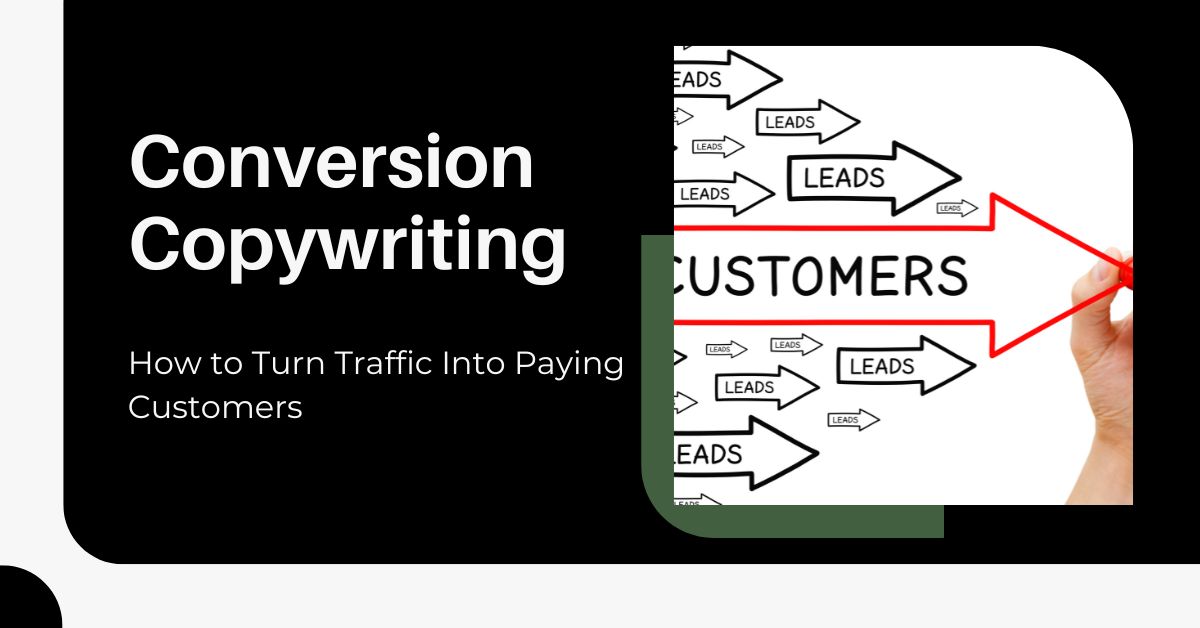
Conversion Copywriting: How to Turn Traffic Into Paying Customers
Conversion copywriting is what stops your website from bleeding opportunity.
You can pour traffic into your site like water into a bucket, but if the bottom is full of holes, nothing stays.
Clicks come and go.
Page views climb.
Dashboards look busy.
Sales? Still stuck.
That quiet frustration is where most brands live, and it’s precisely where conversion copywriting earns its keep.
Because traffic alone doesn’t pay the bills. Attention doesn’t create revenue. And visibility, without persuasion, is just noise wearing a business suit.
Recognizing visitor intent helps you connect genuinely, making your audience feel understood and valued.
Conversion copywriting is the difference between a site that gets visited and a business that gets chosen. It’s the strategic use of words to turn curiosity into commitment, browsers into buyers, and momentum into measurable growth.
Read more: Spec Script Success: Powerful Tips to Write One and Stand Out
In this article, you’ll see why traffic without conversion is a leaky system, how conversion copywriting seals the cracks, and how the right message, delivered at the right moment, turns passive interest into decisive action.
Not louder words.
Sharper ones.
Conversion Copywriting: Turning the “Leaky Bucket” of Traffic into a Scalable Engine
If traffic is the fuel, conversion copywriting is the engine that powers it.
Without it, your marketing efforts stall, no matter how many people you attract.
At its core, conversion copywriting is the strategic craft of writing words designed to prompt a specific action that can be measured, such as click-through rates, sign-ups, or sales, so you can evaluate and optimize your efforts.
Unlike general writing, conversion copywriting doesn’t exist solely to impress or entertain. Its purpose is clarity.
Its power lies in reducing hesitation, addressing silent objections, and guiding readers toward a confident ‘yes,’ so your audience feels assured in their decision.
Read more: Screenwriting Collaboration Mastery: Dos & Don’ts for Co-Writing Success
Every headline, sentence, and call to action works together to communicate value and move the reader forward.
Conversion copywriting focuses on clearly articulating benefits and aligning them with user intent, so action feels natural, not forced.
Where traditional copy might stop at telling a story, conversion copywriting finishes the job by directing behavior. It blends persuasion, psychology, and audience insight to transform passive traffic into predictable outcomes.
In other words, it doesn’t just attract attention; it earns decisions.
Conversion vs. Content vs. Brand Copywriting
Not all copywriting plays the same role, and confusing them is one of the fastest ways to sabotage results.
Conversion copywriting is action-focused. It persuades the reader to do something specific, and do it now. Every word is optimized to support that single goal, whether it’s a click, a sign-up, or a sale.
Content writing, on the other hand, is designed to inform, educate, or entertain. Blog posts, guides, and thought leadership pieces build trust and visibility over time. They’re excellent for SEO and authority, but they don’t always ask for immediate action.
Read more: Unlock High-Impact Copywriting That Converts
Brand copywriting shapes perception. It builds tone, identity, and emotional resonance. Instead of closing the sale, it strengthens familiarity and long-term affinity through storytelling, slogans, and campaigns.
Think of it this way:
- Brand copy builds the relationship.
- Content nurtures interest.
- Conversion copywriting closes the deal.
Each has its place. But when traffic isn’t turning into revenue, it’s usually not a traffic problem, it’s a conversion copywriting gap.
Traffic Is Vanity, Conversion Is Sanity: Where Messaging Breaks Down
High traffic numbers can feel reassuring.
They look good in reports.
They spark optimism.
But traffic without conversion is like a crowded store where no one reaches the checkout.
When messaging fails, conversion stalls.
Common breakdowns include:
- Unclear value messaging: Visitors can’t instantly see what’s in it for them, so they leave.
- Intent mismatch: The copy doesn’t reflect where the visitor is mentally, curious, cautious, or ready to buy.
- Weak calls to action: If the next step isn’t obvious, compelling, or urgent, people won’t take it.
- Feature-heavy language: Lists of features don’t persuade. Outcomes and emotions do.
In many cases, traffic doesn’t convert because the words never bridge the gap between interest and decision. Conversion copywriting exists to close that gap, by making value unmistakable and action feel inevitable.
Hacking the Human OS: The Psychology Behind Conversion Copywriting
People like to believe they buy logically.
In reality, decisions are emotional first and rationalized later.
That’s why conversion copywriting works with human psychology, not against it.
Emotion is the spark.
Trust is the anchor.
Urgency is the trigger.
Emotion pulls attention by tapping into desire, relief, fear, or aspiration. Trust reassures the reader that they’re safe making the choice, through proof, credibility, and clarity.
Urgency nudges them to act now rather than postpone indefinitely, helping your audience feel secure and motivated.
Read more: Ad Copy Tips: 15 Secrets to Skyrocket Your PPC Conversions
When copy ignores these drivers, it becomes informational, but ineffective. Conversion copywriting speaks directly to how people actually decide, not how we wish they would.
It doesn’t pressure.
It persuades.
How Conversion Copywriting Aligns Messaging with User Intent
At its most effective, conversion copywriting feels less like persuasion and more like understanding.
It starts with audience research, listening closely to what people want, fear, and hope to achieve.
From there, it mirrors the reader’s language, anticipates objections, and answers questions before they’re fully formed.
Good conversion copy meets visitors exactly where they are:
- Curious, but uncertain.
- Interested, but cautious.
- Ready, but hesitant.
By aligning messaging with intent, conversion copywriting removes friction.
The next step feels logical.
The value feels clear.
The action feels earned.
That’s why the best conversion copy doesn’t shout or overpromise. It guides. It reassures. And when done correctly, it turns attention into momentum, and momentum into revenue.
The Blueprint: Engineering Conversion Copywriting for Maximum ROI
At this stage, traffic is no longer the problem.
Attention has already been earned.
What matters now is precision.
Conversion copywriting works best when it follows a deliberate blueprint, one that treats persuasion less like guesswork and more like engineering.
Every choice is intentional.
Every word has a job.
And every page is designed to move the reader closer to action without resistance.
This is where high-performing brands separate intuition from execution.
The Logic of Persuasion: High-Performance Principles of Conversion Copywriting
At the center, conversion copywriting isn’t about clever phrases or viral hooks. It’s about strategic persuasion rooted in psychology, clarity, and relevance.
Read more: Master SEO Copywriting: Power Up Your Brand Growth
The goal is simple: guide the reader toward a single explicit action with language that feels natural, helpful, and inevitable.
When conversion copywriting is executed well, it doesn’t feel like selling. It feels like alignment between what the reader wants and what the brand offers.
That alignment is built through structure, not shortcuts.
Programming the Click: Why Multi-Purpose Pages Kill Conversions
One of the most common mistakes in conversion copywriting is trying to make one page do too many things.
When a page asks readers to learn, explore, browse, and buy all at once, it creates cognitive overload.
The brain hesitates.
Action stalls.
Effective conversion copywriting begins with a single objective. Before writing even starts, high-performing teams decide precisely what they want the reader to do, subscribe, purchase, book, or download.
From there, everything aligns:
- The headline sets context.
- The body copy builds belief.
- The CTA directs action.
When every element points to one outcome, friction disappears. The reader doesn’t have to think. They simply move.
That’s why multi-purpose pages dilute results, and focused conversion copywriting multiplies them.
The Diagnostic Phase: Engineering Copy That Solves the Customer’s “Bug”
High-converting copy is never brand-centered. It’s reader-centered.
Read more: Copywriting Services: 13 Winning Tips to Sharpen and Elevate Your Brand Story
Strong conversion copywriting starts with diagnosis, not decoration. It asks hard questions:
- What problem is the reader trying to solve?
- What are they afraid of choosing wrong?
- What outcome are they secretly hoping for?
This insight comes from research, reviews, surveys, interviews, analytics, and real customer language.
When copy reflects what the reader already feels, it builds instant trust.
Instead of convincing, it resonates.
That’s the difference between copy that talks at people and conversion copywriting that speaks with them.
The Value Audit: Why Your “What” Doesn’t Matter Without a Compelling “Why”
Features explain what you do.
Value describes why it matters.
In conversion copywriting, the value proposition is the anchor. It answers the unspoken question every visitor asks within seconds:
Why should I care?
A strong value proposition connects three things clearly:
- Who is the offer for?
- What problem does it solve?
- Why is it better or different?
Without this clarity, even the most polished copy falls flat. People don’t buy products. They buy outcomes, relief, growth, and progress.
Conversion copywriting turns the spotlight away from the brand and onto the transformation the reader wants.
Sell the Outcome, Prove the Process: The Frontend and Backend of Persuasion
Every buying decision has two layers.
The frontend is emotional.
The backend is logical.
Excellent conversion copywriting leads with emotion, relief, confidence, desire, and belonging, then backs it up with proof.
Testimonials, guarantees, data, and credibility markers reassure the rational mind after the emotional decision is made.
This is why benefits outperform features every time.
Features explain mechanics.
Benefits explain the meaning.
And conversion copywriting exists to translate one into the other.
Beyond “Click Here”: Engineering CTAs That Force Movement
A call to action is not a polite suggestion. It’s a directional signal.
Effective conversion copywriting uses CTAs that are clear, specific, and outcome-focused.
Instead of vague prompts, high-performing CTAs tell readers exactly what happens next, and why it’s worth it.
Strong CTAs:
- Use action-oriented language.
- Reinforce value, not effort.
- Match the reader’s readiness level.
When CTAs align with intent, action feels natural, not pressured.
That’s how conversion copywriting turns momentum into movement.
Removing Friction: Clarity, Simplicity, and Flow
Friction is the silent killer of conversions.
Long paragraphs, unclear language, cluttered structure, and vague promises slow readers down.
When effort increases, action decreases.
Read more: Website Copywriting Secrets That Drive Massive Engagement
The best conversion copywriting removes friction by making the path forward obvious. Short sentences.
Clean structure.
Logical flow.
Everyday language.
Nothing to decode.
Nothing to guess.
Nothing to resist.
From headline to CTA, the experience feels smooth, almost invisible. And that’s precisely the point.
This blueprint is what transforms conversion copywriting from theory into ROI.
Beyond the Homepage: Deploying Conversion Copywriting Across the User Journey
Conversion copywriting doesn’t live on a single page.
It works across the entire customer journey, adapting to intent, awareness, and readiness at every stage.
Read more: Landing Page Copywriting Secrets for Creating Persuasive Pages That Convert
Each touchpoint has a different job. The role of conversion copywriting is to meet users where they are, remove the friction that exists at that moment, and move them one step closer to action.
Here’s how high-performing brands deploy conversion copywriting across their funnel.
Homepage Conversion Copywriting Best Practices
Your homepage is the digital equivalent of a first impression, and first impressions decide whether visitors stay or leave.
Effective homepage conversion copywriting focuses on orientation and clarity, not persuasion overload.
Visitors should immediately understand:
- Who are you for?
- What problem do you solve?
- Why should they keep scrolling?
Best practices include:
- Clear, benefit-driven headlines that instantly communicate value.
- Concise, jargon-free messaging focused on the visitor, not the brand.
- Minimal distractions that reduce cognitive load.
- One primary CTA above the fold to guide attention
The homepage isn’t meant to close the sale. Its job is to establish relevance and direct visitors deeper into the funnel with confidence and clarity.
Key takeaway: A strong homepage lowers resistance and funnels attention toward conversion-focused pages.
Landing Pages That Persuade and Convert
Landing pages are where conversion copywriting operates at full force.
Unlike homepages, landing pages have one job and one job only: convert.
High-performing landing page copy:
- Centers on a single conversion goal (sign-up, demo, download, purchase)
- Uses compelling headlines that answer “what’s in it for me?” immediately
- Emphasizes benefits over features.
- Reinforces credibility with testimonials, social proof, or data.
- Uses bold, specific CTAs aligned with intent.
- Readable at a glance, with short blocks of text and organized lists.
Design supports conversion, but copy drives it.
Even small changes in wording can significantly impact results, which is why landing pages are ideal candidates for ongoing testing.
Resolving the Bounce: Using Copy to Debug Objections and Close the Sale
Product and service pages sit deeper in the funnel. Visitors here are interested, but not entirely convinced.
This is where conversion copywriting shifts from persuasion to reassurance.
Effective product and service page copy:
- Leads with outcomes and transformation, not just specifications
- Aligns CTAs with readiness (e.g., “Start Free Trial” vs. “Buy Now”)
- Uses social proof to reduce perceived risk.
- Addresses objections directly with FAQs, guarantees, and clarity.
At this stage, the reader’s central question isn’t “What is this?”
It’s “Is this right for me, and is it worth it?”
Conversion copywriting answers that question clearly and confidently.
Closing the Loop: Recapturing Lost Value with Behavioral Copywriting
Conversion copywriting extends beyond web pages into your funnel communications.
Email sequences, follow-ups, and remarketing messages play a critical role in recovering lost conversions and nurturing intent.
High-impact behavioral copywriting includes:
- Welcome and nurture emails that reinforce value and build trust.
- Cart abandonment sequences that use urgency, incentives, or reminders.
- Segmented messaging based on user behavior, interests, and funnel stage.
Every email is a micro-conversion opportunity. When copy is personalized and intentional, it keeps momentum alive and prevents revenue leakage.
Beta Testing Your Copy: Moving Beyond Intuition with A/B Logic
The best conversion copywriting is never static.
What converts today may underperform tomorrow. That’s why high-performing teams rely on data, not instinct, to guide improvements.
Optimization strategies include:
- A/B testing: Headlines, CTAs, layouts, and subject lines.
- Analytics tracking: Heatmaps, scroll depth, and conversion paths.
- Iterative refinement: Continuous improvement based on real behavior.
Conversion growth doesn’t come from one perfect draft. It comes from disciplined testing, learning, and refinement over time.
Summary: Conversion Copywriting Across the Funnel
- Homepages establish context and reduce initial friction.
- Landing pages focus relentlessly on one conversion goal.
- Product and service pages overcome objections and close the sale.
- Email funnels nurture interest and recover lost opportunities.
- Testing and optimization ensure performance improves over time.
Traffic is potential.
Conversion copywriting unlocks revenue.
Why Conversion-Focused Messaging Is a Long-Term Growth Asset
Conversion copywriting compounds.
Unlike ads or tactics that stop working when the budget stops, strong conversion messaging continues to generate returns long after it’s written.
It improves every channel, SEO, paid traffic, email, and referrals, by making each interaction more effective.
Read more: Email Copywriting: Why These Simple Strategies Instantly Boost Open Rates
That’s why conversion-focused copy isn’t an expense.
It’s infrastructure.
Visibility Is Cheap, Conversions Pay the Bills
Traffic is a vanity metric. Conversions are the real scorecard.
If your messaging isn’t pulling its weight, it’s time for copy built on psychology, clarity, and data, not vibes. Quilltowers helps brands replace passive copy with conversion systems that move prospects from interest to intent, fast.
Contact Quilltowers today and start turning your traffic into revenue.