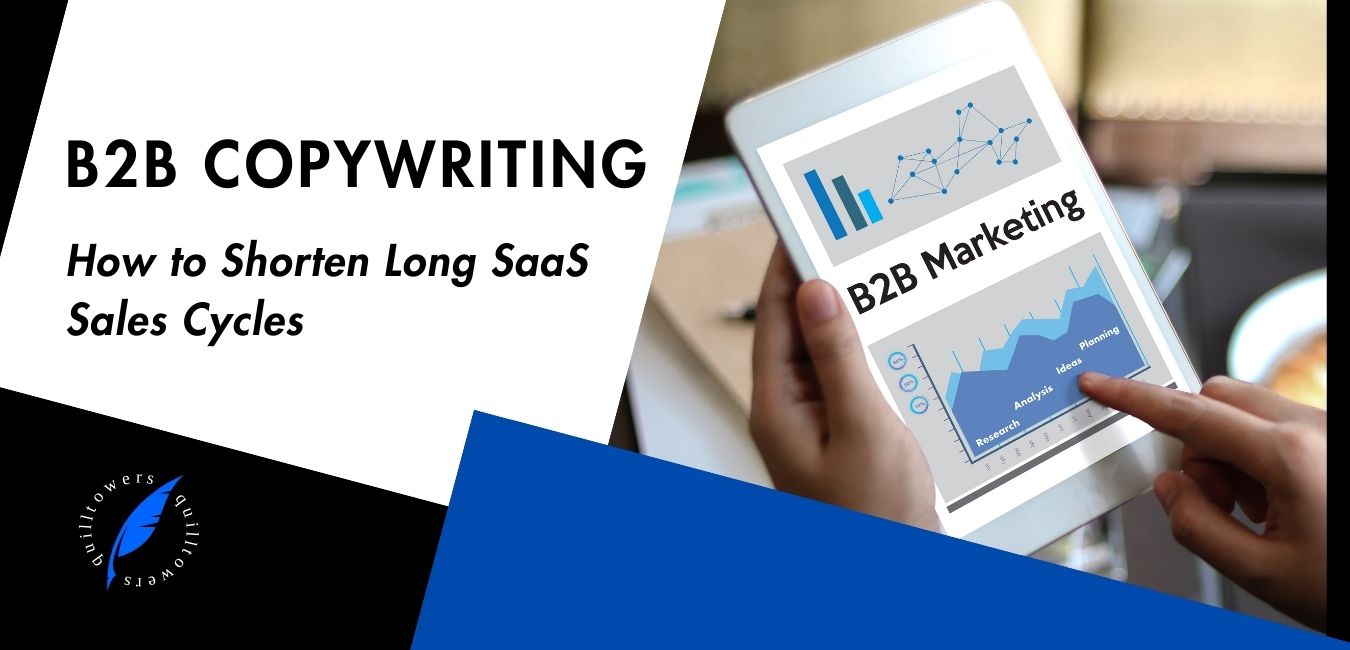
B2B Copywriting: How to Shorten Long SaaS Sales Cycles
B2B copywriting can make or break a SaaS or enterprise sales cycle. Long cycles don’t announce themselves; they creep in quietly, like sand in the gears.
Deals stall. Forecasts falter. Revenue feels just out of reach. And while teams often blame pricing, product, or pipeline volume, the real culprit is frequently hiding in plain sight: B2B copywriting that fails to move buyers forward.
In SaaS and enterprise markets, B2B copywriting is no longer decorative; it’s directional. Clear messaging helps your audience feel confident and reassured, guiding skeptical buyers toward trust and momentum rather than friction and delay.
Think about your sales cycle as a relay race. Sales may cross the finish line, but B2B copywriting runs the opening laps, setting pace, removing hurdles, and ensuring the baton doesn’t get dropped along the way.
Get that wrong, and even the strongest sales team starts the race already winded.
Read more: Conversion Copywriting: How to Turn Traffic Into Paying Customers
This article shows how strategic B2B copywriting shortens time-to-close by aligning with how modern buyers actually buy, non-linear, committee-driven, and risk-aware.
Clearly illustrating specific techniques, like problem framing and proof points, demonstrates how these strategies accelerate decision-making and build trust, helping you implement effective tactics that truly shorten sales cycles.
And that’s where the story truly begins.
B2B Copywriting for the Non-Linear Buyer Journey
Not long ago, the B2B buyer journey looked like a neat staircase: awareness, consideration, decision.
One step at a time.
Today, it seems more like a subway map during rush hour, buyers doubling back, switching lines, and bringing new passengers into the decision mid-ride.
In SaaS and enterprise markets, especially, buyers are informed, independent, and cautious. They research extensively before ever speaking to sales, bouncing between stages as they compare options, assess risk, and loop in stakeholders.
While the core phases, awareness, consideration, and decision, still exist, the journey itself is anything but linear.
This shift makes B2B copywriting more crucial than ever. When buyers move unpredictably, your messaging must meet them wherever they land, making them feel understood and supported without forcing them backwards or leaving them confused.
Why B2B Copywriting Is the New First Impression for SaaS
For modern SaaS buyers, your website, emails, and content speak long before your sales team does.
Studies show that many B2B buyers complete 60–80% of their decision process independently.
By the time they reach sales, they’re informed, but also skeptical.
This changes the role of B2B copywriting entirely.
Your copy is no longer just introducing your brand.
It’s:
- Framing the problem buyers are trying to solve.
- Shaping how they evaluate solutions.
- Influencing how confident they feel in defending the decision internally.
In other words, B2B copywriting sets the tone for trust.
Buyers aren’t asking, “What does this company sell?”
They’re asking, “Can this solution survive scrutiny when I take it to my team?”
Effective B2B copywriting anticipates that question.
It answers it early, clearly, and without hype, helping buyers feel reassured and confident, replacing skepticism with quiet confidence.
Deploying B2B Copywriting as a Lifecycle Acceleration Tool
When treated strategically, B2B copywriting becomes a lifecycle accelerator.
Instead of pushing buyers forward prematurely, it clears fog at every stage, turning hesitation into forward motion.
Here’s how B2B copywriting supports each phase of the buyer journey.
Awareness: Problem Framing and Urgency
At the awareness stage, buyers aren’t shopping, they’re diagnosing.
They’re trying to name the pain before they prescribe a cure.
Read more: Email Copywriting: Why These Simple Strategies Instantly Boost Open Rates
This is where B2B copywriting must educate without selling. The goal isn’t to pitch your product; it’s to articulate the problem better than the buyer can themselves.
Strong awareness-stage B2B copywriting:
- Frames the problem in business terms, not product features.
- Shows the hidden cost of doing nothing.
- Establishes authority through insight, not promotion.
SEO-optimized blogs, industry reports, and educational guides shine here. They position your brand as a clear thinker, a trusted observer who understands the terrain.
And by subtly highlighting the cost of inaction, this type of B2B copywriting creates urgency without pressure, shortening the time buyers spend stuck in neutral.
Consideration: Differentiation and Credibility
Once buyers acknowledge the problem, comparison begins. Options are weighed. Claims are tested. Confidence is fragile.
At this stage, B2B copywriting must shift gears, from educator to evaluator’s guide.
Effective consideration-stage B2B copywriting:
- Explains why your approach works, not just what it does.
- Uses comparisons, case studies, and solution breakdowns.
- Anchors’ claims in proof that buyers can defend internally.
Webinars, comparison guides, and case studies become decision tools, not marketing assets.
They help multiple stakeholders assess fit, feasibility, and risk. Done well, B2B copywriting here doesn’t overwhelm; it reassures.
It validates value without sounding like a sales pitch, keeping buyers moving instead of second-guessing.
Decision: Risk Reduction and Reassurance
By the time buyers reach the decision stage, the shortlist is set, but anxiety remains.
Enterprise decisions carry weight. Careers, budgets, and reputations are on the line.
This is where B2B copywriting earns its keep.
Decision-stage B2B copywriting focuses on risk reduction. It replaces unanswered questions with clarity and reassurance through:
- Testimonials and case studies with real metrics.
- Transparent pricing and onboarding explanations.
- Direct responses to common objections.
Pricing pages, demos, ROI calculators, and proof-driven testimonials work together to remove friction.
Instead of pushing buyers over the finish line, B2B copywriting lowers the bar so that taking the next step feels safe.
Closing the Gap: B2B Copywriting for Stakeholder Alignment
In SaaS and enterprise sales, decisions rarely rest with a single person.
Buying committees must align, and misalignment is where deals slow down or die.
Confusion creeps in when:
- Messaging changes across touchpoints.
- Technical language lacks business context.
- Stakeholder concerns go unaddressed.
Strategic B2B copywriting acts as a translator. It turns complexity into clarity, speaking fluently to both technical and business audiences.
When stakeholders can easily explain the value internally, approvals move faster, and fewer follow-ups are needed.
Why B2B Copywriting Must Prioritize Precision Over Puns
In enterprise markets, clever copy may win applause, but clarity wins deals.
Overly witty language can blur value, especially for buyers scanning for relevance and proof.
Precision matters more than polish.
Effective B2B copywriting:
- Uses clear, business-focused language.
- Emphasizes outcomes over features.
- Aligns with how buyers think at each stage.
When copy is easy to grasp, it’s easier to share, defend, and approve.
And that simplicity quietly compresses the sales cycle, without pressure or noise.
Because in the end, the best B2B copywriting doesn’t shout.
It clears the path and lets the buyer walk forward on their own terms.
Pre-empting the “No”: B2B Copywriting for Modern SaaS Sales
In modern SaaS sales, objections don’t surface at the end of the conversation; they surface quietly at the beginning, in the buyer’s head.
If those doubts aren’t addressed early, they harden into resistance later. That’s why B2B copywriting plays such a critical role long before a sales call is booked.
Read more: Landing Page Copywriting Secrets for Creating Persuasive Pages That Convert
Reducing friction early in the buyer journey means guiding prospects with confidence, not force.
Smart B2B copywriting anticipates concerns, qualifies intent, and answers the questions buyers are often too cautious to ask out loud.
When done correctly, it doesn’t just inform; it disarms hesitation and clears the path to action.
Consider it like laying tracks ahead of a moving train. When B2B copywriting does the heavy lifting upfront, sales conversations feel smoother, shorter, and far more productive.
Shorten the Sales Cycle with Pre-Qualifying B2B Copywriting
Effective B2B copywriting doesn’t begin with features.
It starts with friction, the specific problem your best buyers are already struggling to articulate.
Early in the funnel, your copy should speak directly to that challenge, making prospects feel seen before they ever feel sold to.
This approach does two powerful things at once:
- It attracts high-fit buyers who recognize themselves immediately.
- It quietly repels low-fit leads who would otherwise clog the pipeline.
Precise positioning acts like a filter.
A line such as “Built for mid-market finance teams struggling with cross-platform reporting delays” signals relevance, maturity, and intent.
This kind of B2B copywriting pre-qualifies buyers before they raise their hand, saving sales teams time and shortening the journey to yes.
When prospects know, early on, “This is for companies like mine,” decision-making speeds up.
Less explaining. Less convincing. More momentum.
Turning “No” into “Yes” with Strategic B2B Copywriting
Every B2B buyer arrives with a mental checklist.
Pricing.
Implementation.
Security.
Learning curve.
ROI.
Ignore those concerns, and they quietly stall the deal.
Read more: Website Copywriting Secrets That Drive Massive Engagement
Conversion-focused B2B copywriting addresses objections before buyers voice them, turning resistance into reassurance.
Landing Pages: Where Objections First Surface
Landing pages are often where buyers pause and evaluate risk.
Strong B2B copywriting anticipates their doubts and answers them clearly, right where they land.
Instead of burying reassurance deep in FAQs, surface it prominently by addressing questions like:
- Will this integrate with our existing tools?
- How long will setup actually take?
When landing pages proactively resolve uncertainty, they reduce cognitive load. Buyers don’t have to hunt for clarity; it’s already there, waiting.
And when friction drops, conversions rise.
Product Pages: Translating Features into Outcomes
Listing features is easy.
Translating them into business value is where B2B copywriting earns its keep.
Read more: Copywriting Services: 13 Winning Tips to Sharpen and Elevate Your Brand Story
Product pages should answer the unspoken question: “What does this change for us?”
Instead of technical statements like “API access included,” effective B2B copywriting reframes the benefit:
“Integrates with your existing tools in under an hour, without developer overhead.”
That shift, from function to outcome, reduces perceived risk and helps buyers visualize success.
The clearer the value, the fewer follow-up sales teams need to handle later.
Sales Enablement Assets: Confidence Before the Call
Sales enablement materials extend B2B copywriting into the sales conversation itself.
Solution briefs, FAQs, and one-pagers are potent tools for addressing objections before a rep ever joins the call.
Language like:
- “Most customers see ROI within 60 days”
- “Dedicated onboarding support from day one” does more than inform; it reassures.
These assets give buyers talking points to share internally, reducing hesitation and shortening approval cycles.

Validation at Scale: How B2B Copywriting Leverages Social Proof
When buyers hesitate, they look to the side.
They want to know who else has walked this path and lived to tell the story.
That’s where proof-driven B2B copywriting changes the game.
Case Studies: Proof That Speaks in Numbers
Strong case studies don’t read like success stories.
They read like evidence.
Effective B2B copywriting anchors them in specifics:
- Reduced processing time by 42% in 90 days.
- Cut onboarding costs by 30% across three teams.
These data-driven narratives build trust and help buyers justify decisions internally.
Numbers travel faster through organizations than adjectives ever will.
Testimonials: Trust Borrowed, Not Claimed
Testimonials work best when they’re precise.
Titles, company names, and outcomes matter.
A vague endorsement may sound nice, but it rarely moves cautious buyers.
Read more: Master SEO Copywriting: Power Up Your Brand Growth
Strategic B2B copywriting turns testimonials into credibility anchors, short, sharp reminders that real businesses with real stakes have already chosen this path.
Data-Backed Claims: Making Value Tangible
Whenever possible, back claims with numbers.
Statements like “Trusted by 150+ engineering teams who cut reporting cycles in half” give buyers something concrete to hold onto.
This kind of B2B copywriting reduces guesswork.
And when buyers feel certain, they move faster.
One Voice, One Goal: Aligning B2B Copywriting with Sales Reality
One of the fastest ways to slow a deal is inconsistency.
When marketing says one thing, and sales says another, buyers hesitate.
Confusion breeds caution.
Aligned B2B copywriting closes that gap by ensuring:
- Marketing language mirrors what sales reps say on calls.
- Sales teams are equipped with proven messaging from high-performing copy.
- Terminology stays consistent across landing pages, emails, decks, and demos.
This unified voice creates continuity.
Buyers feel understood at every touchpoint, reducing back-and-forth and accelerating trust.
Read more: Unlock High-Impact Copywriting That Converts
In the end, great B2B copywriting doesn’t argue with buyers.
It answers them, before they even ask.
Absolutely! Let’s wrap this section with a firm conclusion and a punchy CTA, keeping your SEO focus on B2B copywriting and your high-readability, metaphor-rich tone.

The ROI of Scalable, Sales-Aligned B2B Copywriting
In enterprise and SaaS markets where deals can take weeks or months to close, scaling B2B copywriting isn’t just about producing more content; it’s about creating consistent, sales-aligned messaging that supports every stage of the buyer journey, accelerates confidence, and reduces time-to-decision.
When marketing and sales teams share unified language and assets, friction decreases, internal alignment improves, and buyers move through the funnel faster.
The Synergy of Consistent B2B Copywriting
A consistent brand voice and value articulation across channels ensures prospects hear the same message no matter where they interact with your brand.
This depth of alignment reinforces credibility and shortens the path from interest to purchase.
Websites
Your website is often the first place B2B buyers interact with your brand, and it needs to speak to multiple stakeholders simultaneously.
Messaging should be:
- Clear on value proposition.
- Tailored to key personas.
- Aligned with what sales rep discussions reinforce later.
Consistency between site copy and sales scripts builds trust and reduces confusion as buyers move deeper into the funnel.
Email Nurture Sequences
Email sequences are critical for lead nurturing and advancing prospects toward sales conversations.
At scale, effective B2B copywriting for emails should:
- Reinforce product value consistently with website and sales content.
- Address buyer needs at each touchpoint.
- Include compelling CTAs aligned with desired outcomes (e.g., demo booking, content download)
Providing sales teams with templated sequences that cover early-, middle-, and late-stage outreach ensures prospects receive relevant, compelling touchpoints that reduce friction and guide decision-making.
Pitch Decks and Sales Collateral
Sales collateral, such as pitch decks, battlecards, and one-pagers become powerful conversion tool when copywriting aligns with broader brand messaging.
These materials should:
- Mirror the positioning used in marketing content.
- Reinforce key value drivers and competitive differentiation.
- Provide customizable language for sales reps to tailor to specific buyer concerns.
Embedding clear CTAs, like “See how this solves your XYZ challenge in 30 days”, supports advanced buyer engagement and helps shorten negotiation cycles.
Sales Enablement: The Practical Side of B2B Copywriting
Sales enablement copywriting translates positioning into practical, usable assets for sales teams.
Rather than generic content, sales enablement copy equips sellers with ready-to-use materials that directly address buyer questions and objections, boosting confidence and shortening the sales cycle.
Examples of high-impact enablement content include:
- Battlecards: Quick reference guides for sales reps that outline product advantages, objection handling, competitor comparisons, and key messaging points.
- Email Templates: Pre-written but customizable sequences for different stages and scenarios, from follow-ups to proposal delivery.
- Sales Decks & One-Sheets: Crisp, outcome-focused presentations that reinforce value, present use cases, and move the buyer toward a decision.
By structuring sales enablement copy around repeatable frameworks and proven hooks, companies reduce the time reps spend crafting messages on the fly and help buyers make faster, more confident decisions.
Killing the “Maybe”: Slaying the Friction That Stalls Enterprise Deals
One of the most significant contributors to extended B2B sales cycles is uncertainty, particularly around value, differentiation, and ROI.
Clear, consistent B2B copywriting reduces this uncertainty by:
- Communicating outcomes not just features.
- Using the same terms and metaphors across touchpoints.
- Reinforcing benefits with tangible examples and data where possible.
When marketing copy and sales conversations share the same language, prospects experience less cognitive dissonance and make decisions more quickly.
For example, positioning that emphasizes specific quantifiable outcomes, such as “Cut deployment time by 50% in under 60 days”, gives sales teams repeatable talking points that resonate with multi-stakeholder buyers.
Silos to Sign-Off: The Consensus Engine
Enterprise buying decisions often involve committees, from technical teams to business leaders, each with unique priorities.
Scalable B2B copywriting anticipates and addresses this complexity by:
- Segmenting messaging for different personas (e.g., CTO vs CFO)
- Structuring case studies that speak to both technical outcomes and business impact.
- Creating collateral that can be shared internally by buyers to build consensus.
When each stakeholder sees content tailored to their concerns, whether it’s budget, implementation, compliance, or ROI, the sales process moves more quickly because fewer follow-ups are needed to clarify expectations.
This structured, persona-driven approach to copywriting ensures your messaging resonates across the entire buying group and reduces internal friction that often slows decisions. (StoryChief)
Copy That Closes, Not Just Communicates
In enterprise and SaaS environments, long sales cycles aren’t just a function of price or complexity; they’re often the result of unclear, inconsistent, or misaligned messaging.
Scalable, sales-aligned B2B copywriting solves that problem.
When your website, email sequences, pitch decks, and sales enablement assets speak the same language, three things happen fast:
- Buyers gain confidence earlier.
- Sales teams spend less time explaining and re-explaining.
- Decisions move from “maybe” to “yes” with fewer delays.
The real ROI of B2B copywriting isn’t vanity metrics. It’s a shorter time-to-close, smoother internal consensus, and a buying journey that feels intentional, not exhausting.
Read more: Ad Copy Tips: 15 Secrets to Skyrocket Your PPC Conversions
In competitive SaaS and enterprise markets, that clarity isn’t a “nice-to-have.”
It’s a growth lever.
And the brands that win aren’t the loudest, they’re the clearest.
Your Copy Should Shorten Sales Cycles, Not Extend Them
If your content is driving traffic but sales cycles still feel stuck, the issue isn’t volume; it’s alignment.
At Quilltowers, we don’t just write copy.
We build sales-aligned messaging systems that:
- Reduce objections before sales calls.
- Equip reps with conversion-ready assets.
- Speak to every stakeholder in the buying committee.
- Shorten time-to-decision without pressure tactics.
Let’s turn your copy into a closing tool, not just a content asset.
Contact Quilltowers today and let’s create B2B copywriting that moves deals forward, faster.