
Why Great Screenwriting Is Dying in the Age of AI Content
Screenwriting has never looked more accessible than it does right now.
With a few prompts, a handful of AI tools, and enough processing power humming behind a screen, stories can be generated faster than popcorn disappears in a movie theater.
But beneath that convenience sits an uncomfortable truth many creators are beginning to feel in their bones: something about modern screenwriting feels thinner than before.
The structure is still there.
The pacing still moves.
The dialogue often sounds polished.
Yet many stories now land with all the emotional weight of cardboard painted gold.
That is because AI content is flooding storytelling the way fast food flooded fine dining: faster production, endless quantity, instant consumption, but less depth lingering after the experience ends.
And in the middle of that flood, great screenwriting is struggling to breathe.
Streaming platforms demand constant content. Studios chase algorithms like prospectors chasing gold in a dried-up riverbed.
Creators feel pressured to produce faster, post more, release quicker, and stay visible before the internet moves on to the next shiny distraction.
As a result, modern screenwriting is increasingly optimized for speed instead of emotional impact.
The problem is not simply that AI can write scripts.
The problem is that content overload is quietly reshaping what storytelling becomes when efficiency starts sitting in the director’s chair.
Because when stories are treated like products on an assembly line, emotional nuance is often the first thing left on the cutting-room floor.
And audiences are beginning to notice.
Viewers may not always understand why certain scripts feel forgettable, but they can feel the difference between a story written from lived experience and one stitched together from predictive patterns.
That difference matters.
Great screenwriting has always been more than structure alone. It is emotional residue.
It is subtext hiding beneath silence.
It is tension that lingers long after the credits fade to black.
And while AI can imitate storytelling mechanics, it still struggles to replicate the deeply human imperfections that give stories their pulse.
That is the growing tension reshaping modern screenwriting in 2026.
So before another algorithm-generated script disappears into the endless content conveyor belt, it is worth asking a harder question: what actually separates unforgettable screenwriting from content designed only to fill space?
And that’s where screenwriting either becomes art, or just more content.
The Hand-Written Defiance: Saving the Human Heart of Screenwriting
Great screenwriting is beginning to feel like a handwritten letter in a world buried beneath autogenerated text.
The sentences may still form correctly.
The pacing may still hit familiar beats.
The dialogue may even sparkle on the surface.
Read more: The Brutal Truth About Self-Publishing in 2026: What Most Authors Still Ignore
But underneath it all, something deeply human is quietly slipping through the cracks.
In today’s AI-driven landscape, screenwriting is increasingly treated like fast food rolling out of a drive-through window: quick, scalable, endlessly repeatable, and designed for constant consumption.
And while AI can accelerate production, it cannot fully replicate the emotional fingerprints that make great screenwriting unforgettable.
That tension is becoming harder to ignore with every passing year.
As streaming platforms, studios, and digital creators race to satisfy nonstop demand, audiences are slowly beginning to recognize the difference between stories engineered for algorithms and stories shaped by emotional truth.
One may hold attention for a moment.
The other leaves scars on the soul.
Read more: Script vs Screenplay: What’s the Real Difference
And somewhere inside that widening gap, great screenwriting is fighting to protect the very thing that made storytelling matter in the first place.
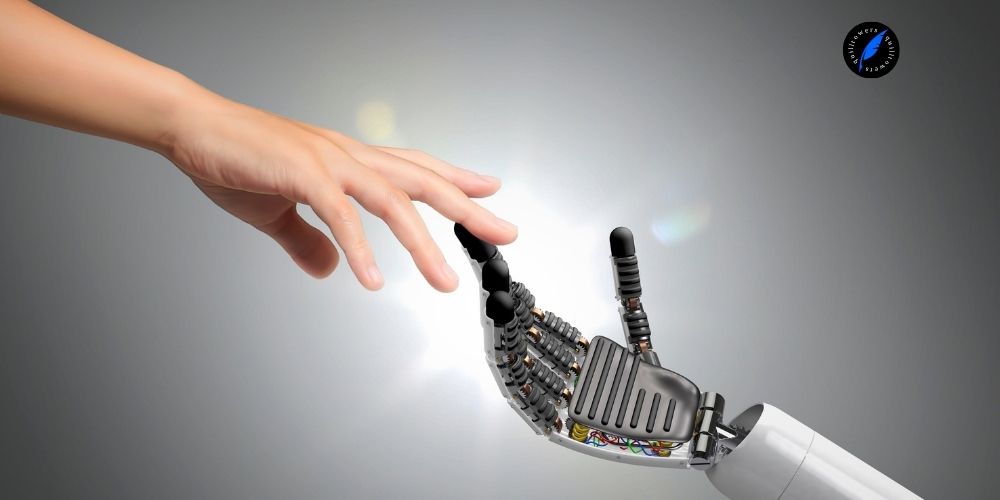
Lived Experience Can’t Be Coded: Why Audiences Still Crave the Human Scar
AI can study thousands of screenwriting samples in seconds. It can recognize narrative patterns, mimic pacing, recreate dialogue rhythms, and generate scenes that technically resemble professional storytelling.
On paper, that sounds impressive.
But great screenwriting has never survived on structure alone.
The deeper problem is that AI understands patterns but does not understand pain.
It can imitate emotional language without ever experiencing the emotions themselves.
And audiences instinctively feel that absence, even when they cannot immediately explain why a script feels emotionally hollow.
A screenplay can hit every structural checkpoint perfectly and still leave viewers feeling absolutely nothing.
Because great screenwriting is not built only on:
- Three-act structure.
- Plot progression.
- Dialogue timing.
- Character arcs.
- Story beats.
It is built on emotional residue.
The invisible weight a story leaves behind after the screen goes dark.
Read more:10 Screenwriting Mistakes to Avoid as a Beginner
That is the difference between content people consume and stories people carry with them for years.
Authentic screenwriting continues to resonate because audiences connect deeply with vulnerability, contradiction, grief, longing, regret, hope, and emotional nuance rooted in real human experience.
This is where formula and emotional resonance begin to pull apart, like cracks spreading across glass.
AI can reproduce familiar storytelling formulas:
- The reluctant hero.
- The redemption arc.
- The shocking betrayal.
- The emotional monologue.
- The triumphant ending.
But great screenwriting transforms familiar structure into something painfully personal.
It gives stories emotional fingerprints.
Think about the difference between someone reading a love letter aloud and someone speaking directly from the heartbreak they barely survived.
One sounds technically correct.
The other bleeds honesty.
And audiences still crave honesty.
That is why many AI-assisted screenwriting projects often feel strangely polished yet emotionally weightless, like beautifully wrapped gifts with nothing meaningful inside.
The scripts may function.
But truly great screenwriting does more than function.
It lingers like smoke in a room long after the fire is gone.
Invisible in the Avalanche: Why Great Screenwriting Is Competing Against Infinite Noise
Modern screenwriting is no longer competing against a handful of films or television shows.
It is competing against an endless flood of content pouring across streaming platforms, social media, YouTube, short-form video apps, and AI-assisted media pipelines.
The sheer volume is staggering.
Every hour, audiences are flooded with:
- New streaming releases.
- AI-generated videos.
- Endless short-form clips.
- Franchise spin-offs.
- Algorithm-curated recommendations.
- Rapid-fire digital entertainment.
And somewhere inside that storm, great screenwriting is fighting to be noticed.
Read more: Understanding Scene Structure in Screenplays: How to Build Powerful Moments on Screen
The challenge is no longer simply creating a good script. The challenge is surviving long enough to hold attention in an economy built to distract people every few seconds.
Industry discussions around the modern “attention economy” increasingly highlight how oversaturation is reshaping audience behavior, shortening attention spans, and making visibility harder for creators across entertainment industries.
That pressure changes storytelling itself.
Studios and platforms now obsess over:
- Watch-time metrics.
- Retention curves.
- Immediate engagement.
- Clickability.
- Viral potential.
As a result, many scripts are designed less like emotional journeys and more like machines engineered to prevent viewers from scrolling away.
But great screenwriting was never meant to function like background noise.
It was meant to stop people in their tracks.
It was meant to leave emotional fingerprints behind.
Read more: How to Create a Compelling Character Arc That Drives Your Story Forward
And yet, in a world overflowing with infinite content, even powerful stories can disappear like whispers swallowed by a hurricane.
This creates a dangerous cycle.
Because the harder visibility becomes, the more creators feel pressured to:
- Produce faster.
- Follow trends.
- Copy proven formulas.
- Avoid creative risks.
- Simplify storytelling.
And ironically, that flood of sameness only makes audiences even more emotionally disconnected.
Viewers begin consuming stories the way people mindlessly snack on junk food: quickly, endlessly, and without remembering much afterwards.
That is why great screenwriting now faces a challenge bigger than AI itself.
It is battling exhaustion.
Audience exhaustion.
Platform exhaustion.
Content exhaustion.
Read more: Powerful Screenplay Opening Scenes: Master the First 10 Pages with Irresistible Hooks
And in that environment, originality often feels like trying to light a candle in the middle of a windstorm.
Yet something fascinating is happening beneath the surface.
The more audiences drown in forgettable content, the more they begin craving stories that actually feel alive.
Which is exactly why emotionally intelligent screenwriting is becoming more valuable, not less.
The Human Pulse: Why Emotional Depth Is Becoming Screenwriting’s Greatest Weapon
Ironically, the rise of AI content may be revealing the true value of great screenwriting more clearly than ever before.
Read more: Electrifying Screenplay Plot Twist Techniques: Surprise Without Losing Your Audience
Because when audiences are surrounded by polished but emotionally hollow storytelling, human vulnerability begins to stand out like fire in a dark room.
People still crave stories that feel:
- Messy.
- Honest.
- Painfully human.
- Emotionally specific.
- Imperfection in believable ways.
And that is where great screenwriting still holds enormous power.
AI can imitate emotion.
But imitation is not the same as emotional truth.
There is a difference between dialogue that sounds emotional and dialogue that feels emotionally lived-in.
Great screenwriting understands that difference instinctively.
It understands silence.
Subtext.
Contradiction.
Emotional tension.
The tiny human details people carry in their voices, fears, regrets, and relationships.
Because human beings are not perfectly structured creatures.
We hesitate.
We contradict ourselves.
We hide emotions inside humor.
We say the wrong things at the wrong times.
We carry scars into conversations without realizing it.
And great screenwriting captures those imperfections beautifully.
That emotional unpredictability remains incredibly difficult for AI to fully replicate because it arises from lived experience rather than from pattern recognition alone.
Read more: Mastering Conflict in Screenwriting: Unleash Magnetic Screenplay Tension
Industry conversations around AI storytelling increasingly acknowledge that emotionally layered writing remains one of the hardest creative qualities to automate convincingly.
This is why emotionally resonant films continue breaking through despite overwhelming content saturation.
Audiences remember stories that make them feel seen.
Not just entertained.
Not just distracted.
Seen.
A perfectly optimized AI-generated script may hold attention temporarily. But great screenwriting creates emotional memory.
It creates:
- Characters people carry for years.
- Scenes that replay in the mind long after viewing.
- Dialogue that becomes cultural language.
- Emotional moments audiences attach to their own lives.
That kind of storytelling does not come from efficiency alone.
It comes from humanity.
And strangely enough, the more artificial content becomes, the more valuable authentic screenwriting starts to feel.
Read more: Elevate Your Script with Impactful Voiceover in Screenplays
Like hearing an actual heartbeat in a room full of machines.
Because audiences may binge endless content for distraction.
But they still return to great screenwriting for connection.

Human Stories Still Hit Harder: Why Great Screenwriting Refuses to Disappear
For all the panic surrounding AI content, one truth still cuts through the noise like lightning across a dark sky: audiences continue to crave human stories.
Read more: Action Screenplay Tips: Master Pacing, Visuals & Fight Scenes
No algorithm has fully replaced the emotional gravity of a scene that feels painfully honest.
No automated system has perfectly recreated the quiet ache of grief, the tension of regret, the sting of rejection, or the warmth of hope the way great screenwriting can.
And that matters now more than ever.
While AI can accelerate production, it cannot fully replicate emotional memory.
Great screenwriting works because it reflects something audiences recognize inside themselves.
It transforms private emotions into shared experiences.
It turns fictional characters into mirrors people carry long after the credits roll.
That emotional connection is the heartbeat of storytelling.
Audiences may admire spectacle for a moment, but they remember emotional truth for years.
Read more: Sci-Fi Screenplay Tips: Make Worlds Feel Real
That is why certain films, scenes, and characters become cultural landmarks while others vanish almost instantly despite massive budgets or endless promotion.
Great screenwriting creates:
- Emotional residue.
- Personal identification.
- Human tension.
- Vulnerability.
- Imperfect authenticity.
Those qualities cannot be manufactured solely through formulas.
Because the most unforgettable stories often emerge from lived experience:
- Heartbreak that shaped someone.
- Fear someone survived.
- Grief someone carried.
- Love someone who has almost lost.
- Questions that someone still cannot answer.
And audiences instinctively recognize when storytelling comes from somewhere real.
It is the difference between a polished imitation flower and one that still carries the scent of soil and rain.
Both may look convincing at first glance.
Only one feels alive.
Read more: Spec Script Success: Powerful Tips to Write One and Stand Out
That is why great screenwriting continues to survive every technological shift. From radio to television, from cinema to streaming, storytelling has always evolved alongside new tools.
But the emotional core remains unchanged.
People still want stories that:
- Move them.
- Disturb them.
- Challenge them.
- Comfort them.
- Make them feel less alone.
And in an age overflowing with artificial content, emotionally honest screenwriting becomes even more powerful precisely because it feels increasingly rare.

The Smartest Writers Will Use AI Without Losing Their Voice
The future of screenwriting will not belong entirely to writers who reject AI.
And it will not belong entirely to creators who depend on it blindly either.
Read more: Screenwriting Collaboration Mastery: Dos & Don’ts for Co-Writing Success
The writers who thrive in the years ahead will likely be the ones who learn how to use AI strategically without allowing it to flatten their creative identity.
Because AI itself is not the real threat.
Creative surrender is.
Used carefully, AI can absolutely support parts of the screenwriting process:
- Brainstorming ideas.
- Organizing research.
- Exploring outlines.
- Testing structure.
- Speeding up repetitive tasks.
For many writers, those tools can function like creative assistants rather than creative replacements.
But great screenwriting still depends on something technology cannot fully automate: perspective.
AI can generate possibilities.
It cannot replace lived experience.
It cannot replicate emotional scars.
It cannot fully understand cultural nuance, personal memory, or deeply human contradiction.
That deeper layer still comes from the writer.
This is why originality will matter even more moving forward.
As AI-generated content becomes more common, audiences will increasingly gravitate toward writers with:
- Distinct voices.
- Emotional specificity.
- Unique perspectives.
- Strong storytelling identity.
- Human vulnerability.
Because sameness becomes easier to spot when the internet floods with machine-assisted storytelling.
And ironically, that saturation may push authentic screenwriting back into the spotlight.
Writers who use AI wisely without sounding emotionally artificial will likely gain the strongest advantage.
Not because they create faster.
But because they create smarter while still sounding unmistakably human.
The goal is not to remove humanity from the process.
It is to protect it.
Adapt or Fade: Why the Future of Great Screenwriting Belongs to Strategic Creators
The future of great screenwriting will not be shaped by talent alone.
It will belong to writers who understand how to balance creativity with adaptability.
Read more: Unlock High-Impact Copywriting That Converts
Because modern storytelling is no longer just about writing scripts in isolation and hoping the industry notices.
Today’s screenwriters must also think about:
- Visibility.
- Branding.
- Audience connection.
- Creative positioning.
- Long-term storytelling identity.
The entertainment industry is evolving too quickly for writers to rely on talent alone like a winning lottery ticket.
Writers who succeed in the AI era will likely become hybrid creators:
- Emotionally intelligent storytellers.
- Strategic thinkers.
- Adaptable creatives.
- Audience-aware communicators.
That does not mean turning storytelling into soulless marketing.
It means understanding that attention has become one of the most valuable currencies in modern entertainment.
And writers who consistently build trust, authenticity, and recognizable creative identity will stand out more easily in crowded spaces.
Because audiences no longer just follow stories.
They follow voices.
This is why personal branding and storytelling identity are becoming increasingly important in modern screenwriting.
Viewers want creators who feel authentic, emotionally aware, and creatively distinct.
Read more: Ad Copy Tips: 15 Secrets to Skyrocket Your PPC Conversions
And as AI-generated content continues multiplying across entertainment platforms, emotionally intelligent storytelling may become one of the rarest and most valuable skills left.
Because no matter how advanced technology becomes, people still crave stories that feel:
- Human.
- Vulnerable.
- Specific.
- Honest.
- Emotionally alive.
That craving is unlikely to disappear.
If anything, it may grow stronger.
Which means great screenwriting is not necessarily dying.
It is becoming harder to fake.
Stand Out in a Sea of Sameness
Great screenwriting is not disappearing solely because of AI. That’s only part of the story.
The deeper issue is subtler and more dangerous.
It is being diluted by speed, sameness, and relentless content overload.
In today’s entertainment world, stories are being produced faster than they can be refined.
Ideas are recycled.
Formats are reused.
And originality is often compressed into whatever fits the fastest production cycle.
Read more: Master SEO Copywriting: Power Up Your Brand Growth
The result is a landscape where many scripts may look polished on the surface, yet feel increasingly interchangeable beneath it.
And when everything starts to feel familiar, nothing truly stands out.
This is where the real shift is happening in screenwriting.
Authentic storytelling is becoming rarer, and because of that, more valuable.
Not less.
Audiences are not just watching more content. They are subconsciously searching for something that feels real again.
Something textured.
Something emotionally grounded.
Something unmistakably human.
That is the edge great screenwriting still holds.
Read more: Copywriting Services: 13 Winning Tips to Sharpen and Elevate Your Brand Story
Because even in a world of advanced tools and AI-generated scripts, emotional truth is still difficult to fake.
It shows up in:
- Honest dialogue.
- Imperfect characters.
- Unexpected emotional choices.
- Quiet, human moments that don’t follow formulas.
- Stories that feel lived-in rather than manufactured.
And those are the details audiences remember.
Not the noise.
Not the speed.
Not the volume.
The feeling.
That is why writers today are not just competing on ideas; they are competing on emotional authenticity.
And in that environment, the strongest advantage a screenwriter can develop is not just technical skill, but a clear, consistent, and unmistakably human storytelling voice.
Read more: Website Copywriting Secrets That Drive Massive Engagement
A voice that doesn’t blend into the algorithm.
A voice that doesn’t sound recycled.
A voice that carries intention, emotion, and identity.
Because in the end, great screenwriting is not about producing more content.
It is about creating stories people cannot forget.
So if you are a writer, filmmaker, or storyteller navigating this new creative era, the goal is simple, but not easy: refine your voice until it cuts through the noise.
Sharpen your storytelling until it feels alive again.
Read more: Landing Page Copywriting Secrets for Creating Persuasive Pages That Convert
And most importantly, protect the human core of your work.
If you are ready to elevate your screenwriting, strengthen your narrative voice, or build stories that actually resonate in a crowded digital world, Quilltowers can help you with scriptwriting, editing, story development, and content strategy support.
Because in a sea of sameness, the writers who win are not the loudest.
They are the most human.

One Comment