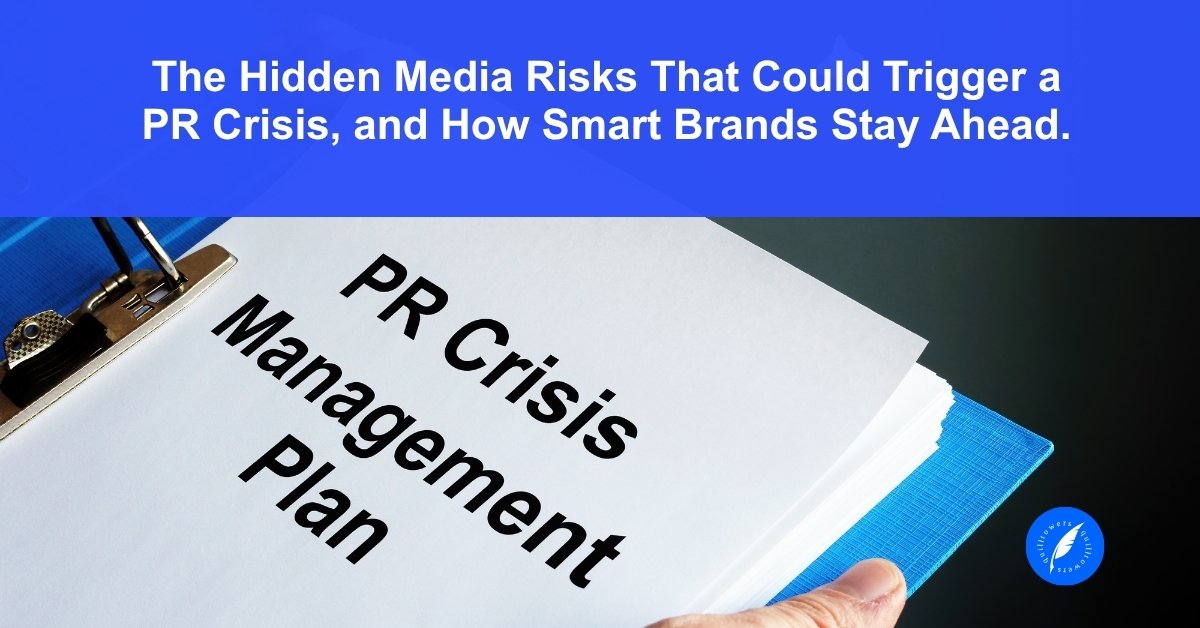
The Hidden Media Risks That Could Trigger a PR Crisis, and How Smart Brands Stay Ahead
One careless post. One misleading headline. One poorly timed campaign. Sometimes, that is all it takes to turn a quiet business day into a public relations nightmare. Media risks can creep up like storm clouds on a clear afternoon, threatening your brand’s reputation before you realize trouble is brewing.
These threats go far beyond negative press coverage. Media risks can stem from an insensitive message, a false rumor, an employee’s public post, or a social media account falling into the wrong hands.
When the wrong message reaches the right audience at the wrong time, a small spark can quickly become a wildfire.
For business owners, marketing managers, and communications teams, the stakes are high. Trust takes time to build, yet a single public misstep can leave customers questioning everything your brand stands for. The answer is not to walk on eggshells or try to control every online conversation.
Recognize potential threats, prepare for the unexpected, and respond clearly when the pressure mounts. Every brand has a story to tell, but not every brand is ready for the moment that story takes an unexpected turn.
Before the next headline catches you off guard, discover the hidden media risks that could threaten your reputation, and how smart brands stay one step ahead.
The Hidden Media Risks That Can Put Your Brand Reputation in Danger
Media risks can hide in plain sight. A routine social media post, a new influencer partnership, or an unanswered customer complaint may seem harmless at first. But when a message is misunderstood, false information spreads, or a small mistake draws public attention, a brand can find itself fighting an unexpected fire.
Recogniing these risks early gives businesses a better chance to protect their reputation before the damage grows.
Misinformation, Rumors, and Misleading Content
False information can spread quickly, leaving a company struggling to catch up. A misleading screenshot, edited video, inaccurate product claim, or rumor about company conduct can circulate online as if it were confirmed fact. Even after a correction appears, the original allegation may continue to shape how some people view the brand.
Read more: The Hidden Cost of Bad Media Consulting for Growing Brands
However, not every inaccurate claim is deliberate misinformation. A customer might misunderstand a policy, a news outlet could report an unverified detail, or someone may knowingly spread fabricated content.
Treating every mistake as a deliberate attack can make matters worse. Brands should investigate the evidence before deciding how to respond.
One way to reduce these media risks is to make accurate information easy to find. Keep product details, company policies, official announcements, and relevant updates clear and accessible.
When a questionable claim surfaces, trace it to its original source, check the surrounding context, and compare it with reliable records before issuing a public response. The U.S. Centers for Disease Control and Prevention’s Crisis and Emergency Risk Communication guidance emphasizes preparation, audience needs, and effective communication during high-pressure situations.
These principles can help businesses explain what is known, address uncertainty, and keep speculation from driving the conversation.
Insensitive Messaging and Tone-Deaf Campaigns
A campaign can look flawless on paper and still fall flat with its audience. A joke about a painful event, a slogan that dismisses a community’s experience, or a cheerful promotional post published during a serious tragedy can make a brand seem out of touch.
One poorly judged message can overshadow months of thoughtful communication.
The problem goes beyond whether people like a campaign. A message may leave audiences feeling ignored, mocked, or misunderstood.
Even with good intentions, those intentions don’t automatically erase the impact of the words. When people believe a brand has treated an important issue lightly, their trust may begin to crack.
Before publishing sensitive content, consider who might be affected and how the message could sound to people outside the marketing team. Think about the wider social context, the timing, and whether humor or promotional language could be misinterpreted.
For campaigns involving tragedy, identity, social issues, or vulnerable communities, seek feedback from people with relevant knowledge and perspectives.
If criticism arises, pause before going on the defensive. Review the concerns fairly and determine whether the message caused genuine harm or reflected a misunderstanding that needs clarification.
Not every negative comment signals a serious media risk, but dismissing all criticism can turn a manageable concern into a public relations problem. Reviewing thoughtfully before publication is often far easier than repairing trust after a campaign misses the mark.
Employee Posts, Influencer Partnerships, and Hidden Disclosures
Employees and influencers can help a brand build personal, authentic relationships. Their voices can extend a company’s reach, introduce its products to new audiences, and strengthen credibility.
Yet these relationships can also create media risks when people mistake personal opinions for official statements, partnership expectations are unclear, or paid promotions appear to be independent recommendations.
Disclosure failures are particularly avoidable. When an influencer receives payment, free products, or another benefit for promoting a brand, audiences may need to know about that connection. The U.S. Federal Trade Commission’s endorsement guidance for advertisers explains that endorsements must not be deceptive and that material connections may need to be disclosed clearly.
Brands should use this guidance as a starting point and check the requirements that apply in their markets.
The best time to prevent confusion is before a partnership begins. Put disclosure expectations, content approval responsibilities, permitted product claims, and correction procedures in writing. Review promotional content where appropriate, and ensure creators understand that endorsements must reflect honest experiences and truthful claims.
Employee communication also needs clear boundaries. Establish reasonable social media guidelines that explain who may speak officially for the company, how to handle confidential information, and where staff can report concerns. These rules should provide direction without attempting to control every personal opinion.
The goal is to protect legitimate business interests while helping employees understand when their public activity could create confusion or expose the organization to unnecessary risk.
Account Security Failures and Accidental Information Leaks
A brand’s social media account is a public-facing asset and a potential point of vulnerability. If someone gains unauthorized access, they could publish fraudulent offers, offensive messages, or false announcements that appear to come directly from the company.
Even without a malicious actor, a misplaced attachment, an incorrect recipient, or an unfinished scheduled post can expose sensitive information or create public confusion.
The U.S. Department of State’s social media account security guidance warns of the risks compromised organizational accounts pose, including spreading inaccurate or sensitive information and causing reputational damage.
Although the guidance was written for the department, the core lesson applies to businesses: official accounts need clear ownership and reliable security measures.
Start with multi-factor authentication and strong password management. Limit administrator permissions to people who genuinely need them, review access regularly, and remove permissions promptly when employees or agency partners leave or change roles.
Secure account recovery details and make sure the right people know how to respond if an account is compromised. Prevention also depends on careful publishing habits. Require a second review for high-impact announcements, double-check links and attachments, and reassess scheduled posts when major events make their timing inappropriate.
Keep an incident contact list somewhere accessible outside the affected platform so your team can coordinate a response if it loses access.
These safeguards may seem routine, but they can make a meaningful difference when something goes wrong. By protecting official accounts, reviewing sensitive content, and preparing for unexpected incidents, businesses can reduce avoidable media risks and keep a small mistake from becoming a much larger reputational problem.
How Smart Brands Prevent Media Risks Before They Become PR Crises
Knowing where media risks begin is only half the battle. Next, build habits that help your team spot warning signs, make sound decisions, and act before a small problem grows legs. A strong prevention plan will not eliminate every threat, but it can help your brand respond with greater confidence when the unexpected happens.
Build a Media Risk Management Plan
Hope is not a crisis management strategy. Brands need a clear plan that explains what could go wrong, who should respond, and how to make decisions under pressure.
Without one, employees may scramble for answers, publish conflicting statements, or leave customers wondering whether anyone is in control.
Read more:5 Game-Changing Media Consulting Techniques for Building Trust and Authority
Start by identifying the media risks most relevant to your organization. These may include misleading claims, customer complaints gaining attention, sensitive campaign content, influencer disclosure failures, account breaches, or the accidental release of private information. Consider the likelihood of each risk and the potential harm it could cause.
Next, assign responsibilities. Decide who monitors public conversations, verifies information, approves official statements, and can escalate an urgent issue. The CDC’s Crisis and Emergency Risk Communication guidance highlights the importance of planning and preparing communication roles before a crisis unfolds.
For businesses, that preparation can reduce confusion when every minute feels like a ticking clock. Your plan should also include approved communication channels, escalation procedures, and draft holding statements for likely scenarios.
These drafts should provide a starting point, not a substitute for checking the facts. Review the plan regularly, update contact details, and run practice exercises so team members understand their responsibilities.
Monitor Conversations and Verify Warning Signs
Media risks rarely arrive with a formal announcement. Sometimes, the first sign is a sudden increase in customer complaints. Other times, it is a misleading post gaining attention, a journalist requesting comment, or several people asking the same troubling question.
Monitoring helps brands notice these patterns before they become harder to manage. Track mentions of your business, products, executives, campaigns, and relevant brand names across the channels your audience uses. Review customer feedback, media coverage, and creator conversations for recurring concerns or claims that need investigation.
However, monitoring is not the same as reacting to every criticism. A handful of negative comments does not automatically signal a PR crisis. Look at the context, the accuracy of the claims, the pace of discussion, and the potential consequences.
A minor complaint may call for a direct customer service response, while credible allegations involving safety, privacy, or misconduct may require immediate escalation.
Verification must come before public correction. Check original posts, confirm dates and details, consult relevant records, and speak with the people responsible for the issue. Keep a record of what you know, what remains uncertain, and what you are doing to establish the facts.
When the situation is still developing, communicate that honestly. A brief statement acknowledging the concern and explaining that the company is verifying the facts is more responsible than a confident answer based on guesswork. The aim is to keep misinformation from filling an information vacuum while avoiding claims your team cannot yet support.
Set Clear Content, Influencer, and Account-Security Rules
A prevention plan works best when everyday practices support it. If employees don’t understand approval procedures, creators aren’t sure about disclosures, or too many people have access to official accounts, your brand may remain exposed even with a crisis plan in place.
Begin with content standards. Establish a review process for sensitive campaigns, public announcements, product claims, and statements about unfolding events. Clarify who can approve content and when a post should be paused for further review.
During a tragedy or rapidly changing situation, even a previously scheduled message may need to be reconsidered.
For influencer partnerships, put expectations in writing before content goes live. Explain disclosure requirements, permitted product claims, approval steps, and how mistakes should be corrected. The Federal Trade Commission’s endorsement guidance helps advertisers understand their responsibilities when endorsements involve material connections, such as payment or gifts.
Clear instructions can help prevent sponsored content from misleading audiences or undermining trust.
Account security deserves the same attention. Require multi-factor authentication, restrict access to authorized team members, and remove permissions when someone changes roles or leaves the organization. Keep recovery information current, and create a process for reporting suspicious logins, phishing attempts, or accidental disclosures.
For important announcements, use a second reviewer to catch errors before publication.
Finally, train employees and partners to raise concerns early. Make it clear that reporting a potential mistake is better than hiding it until the problem spreads. Consistent rules, regular reviews, and open communication help turn media risk management from a document sitting in a folder into a practical part of daily work.
How to Respond When Media Risks Trigger a PR Crisis
Even the most prepared brand can face a crisis. A rumor may spread faster than expected, a campaign may provoke genuine concern, or a security breach may expose information that should have stayed private. When that happens, the goal is not to win every argument online. It is to protect people, establish the facts, and rebuild trust through responsible action.
Respond Quickly Without Guessing
When a media crisis breaks, silence invites speculation. But rushing out a statement before checking the facts can turn one problem into two. The best response balances speed with accuracy.
Begin by activating your crisis response plan. Gather the people responsible for communication, customer service, leadership, and legal or compliance matters where appropriate. Establish what is known, what remains uncertain, who may be affected, and what needs immediate attention.
If the issue involves a security breach or potential harm to customers, prioritize containment and appropriate notifications alongside public communication.
If your team needs more time to verify details, issue a short holding statement. Acknowledge the concern, explain that you are investigating, and tell people when or where they can expect an update, if you can commit to that. Avoid speculation, defensive language, and promises you may not be able to keep.
Choose the response channel carefully. A public post may be appropriate when a misleading claim is circulating widely, while a direct message or customer email may better serve people dealing with an individual problem. For a serious issue affecting many stakeholders, use consistent messaging across relevant channels.
The Public Relations Society of America’s crisis communication planning guidance emphasizes preparing response structures and reviewing how an organization handles a crisis. The practical lesson is simple: know who makes decisions, verify the facts, and communicate through a coordinated process rather than letting panic take the wheel.
Communicate With Transparency, Empathy, and Consistency
Facts matter, but so does the way a brand communicates them. A technically accurate statement can still damage trust if it sounds cold, dismissive, or more concerned with protecting the company than addressing the people affected.
Start by acknowledging the issue and its impact. If customers have experienced a genuine problem, recognize their concern without minimizing it. If the company made a mistake, explain what happened to the extent the facts allow, take responsibility where appropriate, and outline the steps being taken to address it.
Read more: Why Your Book Isn’t Selling: 7 Critical Publishing Problems You Should Fix
Transparency does not mean sharing every internal detail. Confidential information, personal data, and details that could interfere with an investigation may need protection. Instead, be clear about what you can confirm, what you cannot yet discuss, and why further information may be needed before you provide a complete answer.
Keep messages consistent across platforms and spokespeople. If new evidence changes the situation, update the public explanation rather than letting outdated information linger. The CDC’s Crisis and Emergency Risk Communication guidance provides a framework for communicating during high-pressure situations, including the importance of understanding audience needs and responding thoughtfully as circumstances develop.
Above all, avoid arguing with critics just to win. Correct demonstrably false claims with evidence, answer legitimate questions, and, when needed, move individual complaints into appropriate support channels.
A calm, humane response can help prevent a difficult moment from becoming a lasting symbol of how your brand treats people.
Learn From the Crisis and Strengthen Your Reputation
As public attention fades, it may be tempting to close the file and move on. Resist that urge. A crisis can reveal weaknesses in your approval process, account security, employee training, customer communication, or decision-making structure.
Ignoring those lessons leaves the door open for the same problem to return.
Start with a review of the incident. Build a timeline of what happened, when the team became aware of it, which actions were taken, and how audiences responded. Identify what worked, where delays occurred, and which decisions created unnecessary confusion.
Invite feedback from the people involved, including customer-facing employees who may have noticed concerns before they reached senior management.
Then turn those findings into practical changes. You might revise campaign approval procedures, strengthen access controls, improve influencer contracts, update crisis contact lists, or introduce clearer escalation rules. Assign responsibility for each change and set a reasonable deadline so recommendations do not disappear into meeting notes.
Reputation recovery also requires follow-through. If the crisis exposed a genuine failure, demonstrate progress through meaningful action rather than relying on polished statements alone.
Keep affected stakeholders informed when appropriate, address unresolved concerns, and ensure future conduct supports your brand’s promises.
Finally, test the revised plan. A tabletop exercise or simulated incident can help your team identify remaining gaps before another real-world problem puts everyone under pressure. Media risks will never disappear entirely, but a brand that learns, adapts, and communicates responsibly can handle them better.
Make Media Risk Management Part of Your Brand Strategy
Media risks can emerge from an ordinary post, an unclear partnership, a false rumor, or a mistake that reaches the public at the worst possible moment. The outcome isn’t always determined by the size of the initial problem. Often, it depends on how quickly the brand recognizes the issue, verifies the facts, and responds with care.
Make prevention part of everyday operations. Give your team clear responsibilities, monitor relevant conversations, protect your communication channels, and prepare a response plan before you need one. When a crisis occurs, lead with accuracy, empathy, and action, and use the experience to strengthen your systems.
Your brand’s reputation is too valuable to leave to chance. At Quilltowers, we help businesses communicate clearly, protect their stories, and build stronger connections with their audiences.
Contact us to strengthen your brand messaging and prepare for the moments when every word matters.