10 Proofreading Mistakes That Are Killing Your Content Credibility
Proofreading mistakes are like tiny cracks in a glass window. At first glance, they seem harmless. But once the light hits them, every flaw becomes impossible to ignore.
You can have brilliant ideas, sharp insights, and powerful storytelling, yet a few overlooked proofreading mistakes can make your content feel careless before readers even absorb the message.
It’s like showing up to an important meeting in a wrinkled suit. The substance may still be there, but the presentation quietly saps the room of confidence.
And in today’s digital landscape, where trust is thinner than ice on a warm day, small errors carry more weight than ever.
Readers notice when punctuation stumbles, when tone shifts awkwardly, or when typos sit on the page like coffee stains on a white shirt. Addressing these mistakes helps you build confidence and authority with your audience.
That’s the danger of poor proofreading: it rarely destroys credibility in one dramatic moment. Instead, it erodes trust slowly, like water slipping through unseen cracks in a foundation.
But here’s the good news: most proofreading mistakes are fixable once you know where they hide.
From skipped read-throughs to inconsistent tone, the difference between content that commands respect and content that gets ignored often comes down to the smallest details.
Recognizing and fixing these proofreading mistakes empowers you to uphold high standards and take pride in your content’s credibility.
So before another typo chips away at your authority, let’s expose the proofreading mistakes that matter most.
The Silent Tear: How Proofreading Mistakes Sabotage Your Authority
Even the strongest ideas can unravel when proofreading mistakes slip through the cracks.
Like a tiny tear in a well-tailored outfit, small errors may seem harmless at first, but they quietly chip away at clarity, professionalism, and trust.
Read more: LinkedIn Ghostwriting in 2026: Why Founders Are Paying Thousands for Content
The tricky part is that most proofreading mistakes are not dramatic. They do not wave red flags or sound alarms. Instead, they creep in silently through rushed editing, tired eyes, and overconfidence.
Left unchecked, they can turn polished writing into something that feels sloppy, rushed, or disconnected.
And in a world where readers make snap judgments in seconds, those small cracks matter more than many writers realize.
So before your content loses authority at the finish line, let’s uncover the most damaging proofreading mistakes and, more importantly, how to fix them before they cost you credibility.
This knowledge helps you feel confident in your ability to produce polished, trustworthy content.
1. Skipping the Final Read-Through
One of the most common proofreading mistakes is assuming the work is finished the moment the writing stops, which can lead to missing critical errors.
Emphasizing the final read-through’s role in catching overlooked mistakes helps readers see why this step is essential for maintaining content quality.
That final read-through may seem small, but skipping it is like walking out of the house with your shirt buttoned the wrong way. You rarely notice the issue until someone else does.
When writers skip this step, they often miss:
- Awkward phrasing.
- Missing words.
- Structural inconsistencies.
- Sentences that sound clear in their head but are confusing on the page.
The problem is familiarity. Your brain already knows what you meant to say, so it fills in gaps automatically. That makes it harder to spot proofreading mistakes immediately after writing.
Quick Fix
Before proofreading:
- Step away from the content for a few minutes.
- Return with fresh eyes.
- Read slowly, not quickly.
- Focus on clarity, sentence by sentence.
Sometimes, distance is the magnifying glass that reveals hidden cracks.
Example
Bad: “This strategy help businesses grow fast.”
Good: “This strategy helps businesses grow fast.”
2. Relying Too Much on Spellcheck Tools
Spell-check tools are helpful, but trusting them completely is one of the sneakiest proofreading mistakes writers make, because they often miss context-based errors, incorrect word choices, and tone inconsistencies.
Highlighting these limitations encourages writers to supplement automated checks with manual reviews.
Technology can catch obvious spelling issues, yet it often misses:
- Context-based mistakes.
- Incorrect word choices.
- Tone inconsistencies.
- Words that are technically correct but contextually wrong.
To a machine, “their” and “there” may both look perfectly acceptable. But to a reader, the wrong choice feels like a flat tire on a smooth road.
This is why automated tools should support your proofreading process, not replace it.
Quick Fix
Use spellcheck as a first layer, not the final layer:
- Run your content through editing software.
- Then manually review every paragraph for meaning and flow.
- Pay attention to words that sound alike but mean different things.
Because even the smartest software cannot fully understand human nuance.
Example
Bad: “They going to launch the product soon.”
Good: “They’re going to launch the product soon.”
3. Ignoring Grammar and Punctuation Errors
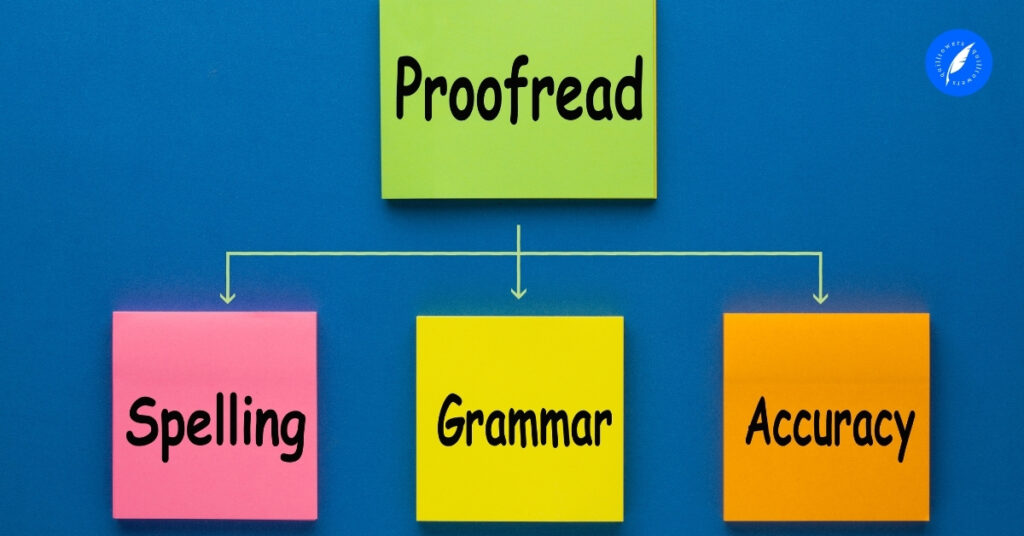
Grammar and punctuation are the invisible scaffolding holding your writing together, and ignoring them can lead to confusing sentences, disrupted flow, and a perception of carelessness.
Emphasizing their impact on clarity helps writers understand why meticulous proofreading matters.
Even small punctuation issues can:
- Confuse readers.
- Interrupt flow.
- Change meaning completely.
- Make content feel careless.
Think of punctuation as traffic signals for the reader’s mind. Without them, sentences crash into each other like cars in a fog.
And while readers may forgive the occasional typo, repeated grammar problems can quietly convince them that the writer lacks attention to detail.
Quick Fix
To reduce grammar-related proofreading mistakes:
- Review sentence structure carefully.
- Watch for comma splices and run-on sentences.
- Break long thoughts into shorter, cleaner lines.
- Read aloud to catch awkward rhythm.
Clarity should feel effortless to the reader, even if it takes effort behind the scenes.
Example
Bad: “Let’s eat John.”
Good: “Let’s eat, John.”
One comma can mean the difference between dinner plans and disaster.
4. Overlooking Typos and Small Mistakes
Typos are the mosquitoes of writing. Tiny, irritating, and surprisingly effective at ruining the experience.
They are also among the most stubborn proofreading mistakes because the brain naturally autocorrects familiar text as it reads. Instead of seeing what is actually written, your mind often sees what it expects to see.
That’s why even skilled writers overlook:
- Misspelt words.
- Missing letters.
- Duplicate words.
- Tiny formatting inconsistencies.
And unfortunately, readers notice those details more than writers think.
A single typo can:
- Distract the reader.
- Break immersion.
- Make polished content feel rushed.
- Damage to perceived professionalism.
Quick Fix
To catch these hidden proofreading mistakes:
- Read your content aloud.
- Change the font size or layout.
- Review line by line instead of skimming paragraphs.
- Use a printed version if possible.
Sometimes, changing how the text looks helps your brain stop “auto-fixing” errors.
Example
Bad: “This is one of the most important step in writing.”
Good: “This is one of the most important steps in writing.” One missing letter may seem small, but credibility often lives in the details.
5. Inconsistent Tone and Style
Consistency is what makes writing feel intentional. Without it, content begins to feel scattered, like multiple radio stations playing at once.
Read more: AI Scriptwriting: How to Create High-Converting Scripts Faster in 2026
This is one of the more subtle proofreading mistakes, but it has a powerful effect on how readers perceive your brand.
Inconsistent tone often appears as:
- Switching between formal and casual language.
- Abrupt style changes mid-article.
- Uneven formatting.
- Conflicting emotional tones.
One paragraph sounds professional. The next sounds overly casual. The result feels disjointed, and readers begin to lose connection with the message.
Strong writing should feel like one clear voice guiding the reader from beginning to end.
Quick Fix
Before editing:
- Define your tone clearly.
- Decide whether the piece should feel conversational, authoritative, educational, or persuasive.
- Maintain the same voice throughout the article.
- Review transitions carefully to ensure flow.
Because consistency builds trust the same way rhythm builds music.
Example
Bad: “This guide explore advanced strategies. So yeah, let’s keep it simple.”
Good: “This guide explores advanced strategies while keeping the approach simple and clear.” When tone stays aligned, the reader stays immersed.
The Glitch in the Matrix: Errors Your Reader Feels but Can’t See
Not all proofreading mistakes arrive with flashing warning signs. Some move quietly through your writing like static in a conversation, subtle enough to avoid immediate detection, yet disruptive enough to make the entire message feel off balance.
And that feeling matters more than most writers realize.
Because when content feels clumsy, inconsistent, or slightly unnatural, readers begin to lose trust before they can even explain why.
It’s the digital equivalent of a shaky handshake: small, almost invisible, but enough to create doubt.
Read more: How to Build Topic Clusters That Boost Your SEO Rankings Fast
The most dangerous proofreading mistakes often hide at the word and sentence level.
They slip past tired eyes, familiar patterns, and rushed editing sessions. And while readers may not consciously identify the issue, they still feel the friction.
Before those hidden cracks quietly erode your authority, let’s uncover the subtle proofreading mistakes that silently undermine readability, professionalism, and trust.
6. Misused Words (Their vs There, Your vs You’re)
Some of the sneakiest proofreading mistakes are not spelling errors at all. They are correctly spelt words used in the wrong context.
Words like:
- their / there / they’re.
- your / you’re.
- to / too / two often slip through spellcheck tools because the software treats them as technically correct.
Read more: Search Intent Analysis: A Complete Guide to Understanding User Intent
But readers do not process writing like machines. They process meaning. So when the wrong word appears, even subtly, it jars the reader like hearing a musician hit the wrong note in the middle of a performance.
That is why these small proofreading mistakes damage credibility faster than many writers expect.
Why This Hurts Credibility
Misused words signal carelessness. They suggest the writer either rushed the process or failed to review the content carefully.
And once trust cracks, readers begin questioning everything else on the page.
Quick Fix
To avoid these hidden proofreading mistakes:
- Read for meaning, not just spelling.
- Slow your reading pace.
- Double-check commonly confused words.
- Pay attention to context.
Because speed is often where mistakes hide best.
Example
Bad: “You going to lose credibility if this continues.”
Good: “You’re going to lose credibility if this continues.”
7. Repetition and Wordiness
Some proofreading mistakes do not weaken writing through error. They weaken it through exhaustion.
Repetition quietly drains energy from your content by:
- Repeating the same word too often.
- Restating ideas unnecessarily.
- Filling sentences with fluff that adds no value.
It’s like listening to someone circle the same point over and over in conversation. Eventually, the message loses sharpness, and the listener mentally checks out.
Strong writing should move like a clean stream, not a clogged pipe.
Why This Hurts Readability
Wordiness slows momentum. It forces readers to work harder than necessary, and online readers rarely have patience for that.
In a world built on scrolling, bloated writing sinks like an anchor.
Quick Fix
To reduce repetition-related proofreading mistakes:
- Remove filler phrases.
- Replace repeated words with stronger alternatives.
- Shorten sentences where possible.
- Prioritize clarity over length.
Remember: concise writing often sounds more confident.
Example
Bad: “This strategy is very effective and really works well because it is very effective.”
Good: “This strategy works because it is effective.” Cleaner writing creates a stronger impact.
8. Formatting and Spacing Issues
Formatting issues are the silent killers of professionalism. They may not affect the message directly, but they absolutely affect perception.
These subtle proofreading mistakes include:
- Uneven spacing.
- Misaligned headings.
- Inconsistent font styles.
- Cluttered paragraphs.
- Irregular formatting patterns.
Think of formatting like a presentation at a formal event. Even excellent ideas lose polish when the packaging looks chaotic.
Read more: Keyword Mapping Techniques: A Simple Guide to Better SEO Results
Readers may not consciously say, “This spacing feels inconsistent,” but they feel the disorder immediately.
Why This Hurts Credibility
Poor formatting makes content feel rushed and unprofessional. It interrupts reading flow and weakens visual trust.
It’s like showing up to an important interview wearing mismatched shoes. The message may still be valuable, but the presentation distracts from it.
Quick Fix
To eliminate formatting-related proofreading mistakes:
- Keep spacing consistent.
- Use uniform headings and font styles.
- Break large text blocks into smaller paragraphs.
- Review the document visually before publishing.
Because proofreading is not only about words. It is also about presentation.
Example
Bad:
- Different font sizes.
- Uneven spacing.
- Inconsistent headings.
Good:
- Clean formatting.
- Consistent structure.
- Balanced spacing throughout.
When a presentation feels polished, authority naturally follows.
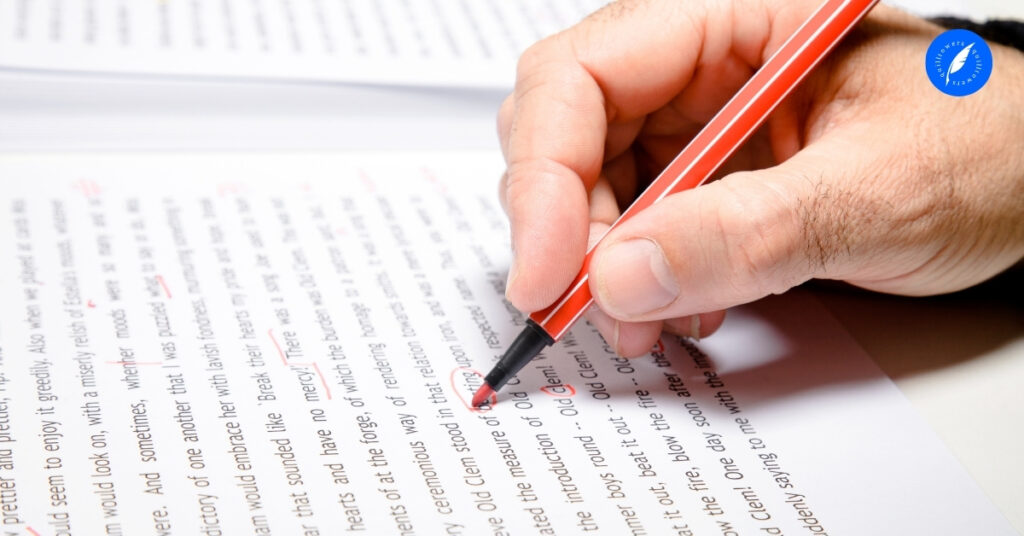
Outsmarting the Eye: Professional Systems to Avoid Proofreading Mistakes
Fixing proofreading mistakes is not about perfectionism. It is about systems.
Most writers do not struggle because they lack intelligence or skill. They struggle because they approach proofreading randomly, hoping errors reveal themselves naturally.
But proofreading does not work that way.
It is more like polishing glass. If you rush the process or skip sections, the smudges remain, even if the surface looks clean to the eye.
Read more: 12 Powerful Content Strategy Hacks to Outrank Competitors Fast
That means avoiding proofreading mistakes requires structure, distance, and intentional review.
And once you build the right system, catching errors becomes far easier.
9. Proofreading Immediately After Writing
One of the most overlooked proofreading mistakes is editing your content immediately after finishing it.
It feels productive.
It feels efficient.
But in reality, your brain is still too close to the writing.
Read more: 5 Powerful Content Strategy Tactics That Turn Traffic Into Conversions
Instead of reading what is actually on the page, your mind automatically fills in missing words, smooths awkward phrasing, and overlooks small issues because it already knows the intended meaning.
It’s like searching for your glasses while they are sitting on your head. Familiarity blinds you.
Why This Hurts Your Content
Editing too quickly creates blind spots:
- Errors hide in plain sight.
- Awkward wording feels normal.
- Missing words become invisible.
And those unnoticed proofreading mistakes quietly reduce clarity and professionalism.
Quick Fix: Create Distance Before Editing
Before proofreading:
- Step away for 15–30 minutes.
- Return with fresh eyes.
- Read slowly and deliberately.
- Avoid skimming.
Even a short mental reset dramatically improves error detection.
Example Workflow
Write → immediately proofread → miss mistakes.
Write → take a break → return → catch errors clearly.
The difference is not effort. It is perspective.
10. Not Using a Structured Proofreading Process
Another major source of proofreading mistakes is trying to fix everything at once.
When writers attempt to review grammar, flow, formatting, tone, and structure simultaneously, important details slip through unnoticed.
It’s like trying to clean an entire house by spinning in circles instead of tackling one room at a time.
Without structure:
- Small errors get overlooked.
- Writing feels inconsistent.
- Clarity weakens.
- Professionalism drops.
And scattered editing almost always produces scattered results.
Quick Fix: Use a Simple Proofreading System
Instead of reviewing everything at once, break proofreading into focused stages.
Pass 1: Grammar and Punctuation
- Check sentence clarity.
- Fix punctuation issues.
- Remove run-on sentences.
Pass 2: Word Choice and Repetition
- Tighten weak phrasing.
- Remove unnecessary words.
- Eliminate repetition.
Pass 3: Formatting and Consistency
- Review headings.
- Check spacing and alignment.
- Ensure tone consistency.
Pass 4: Final Read (Out Loud)
- Catch awkward rhythm.
- Identify hidden proofreading mistakes.
- Improve sentence flow.
Structured editing transforms proofreading from guesswork into a repeatable system.
A Simple Checklist to Avoid Proofreading Mistakes
Before publishing any piece of content, ask yourself:
- Did I step away before editing?
- Did I read the content aloud?
- Did I review formatting and spacing?
- Did I check for repeated words?
- Did I rely too heavily on spellcheck?
- Did I proofread for flow, not just grammar?
- Did someone else review the content?
Sometimes a second pair of eyes catches what familiarity hides.
Because even experienced writers miss proofreading mistakes when they edit for too long on their own.
Tiny Errors, Massive Consequences
The danger of proofreading mistakes is not just that they create errors. It is that they quietly weaken trust.
One typo may seem harmless.
One formatting issue may feel minor.
One awkward sentence may appear insignificant.
Read more: 10 Powerful Content Strategy Frameworks That Explode Brand Visibility
But together, those small cracks reshape how readers perceive your authority, professionalism, and credibility.
Polished writing does more than communicate ideas clearly.
It builds confidence.
It signals expertise.
It creates the kind of trust that turns readers into clients, followers, customers, and loyal audiences.
Because in content creation, clarity is not decoration. It is currency.
And in a crowded digital world where attention disappears in seconds, sloppy writing is a luxury brands can no longer afford.
If your content deserves to sound as strong as your ideas, now is the time to stop letting hidden proofreading mistakes quietly sabotage your credibility.
Quilltowers can help you refine your content into writing that feels polished, persuasive, and impossible to ignore.
Read more: 7 Proven Content Strategy Secrets That Skyrocket Organic Traffic Fast
Because the difference between content that gets skimmed and content that earns trust often comes down to the details most people overlook.
And while others keep publishing rushed content filled with avoidable proofreading mistakes, your brand can stand out with writing that feels sharp, intentional, and built to leave a lasting impression.
Contact Quilltowers today and transform your writing into content that builds trust, strengthens credibility, and keeps your audience coming back for more.