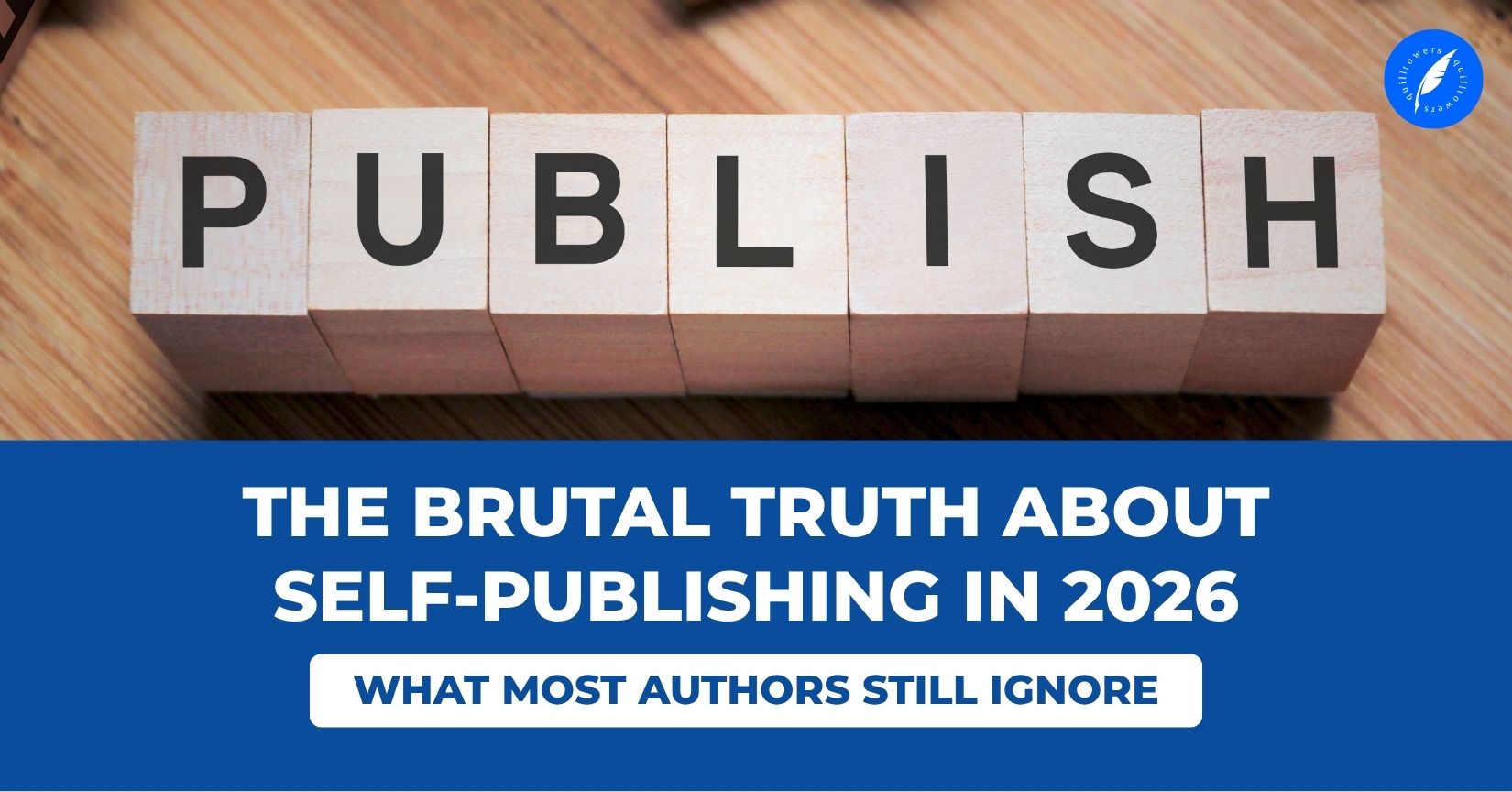
The Brutal Truth About Self-Publishing in 2026: What Most Authors Still Ignore
Self-publishing has never looked more tempting than it does in 2026.
With a laptop, a manuscript, and a few clicks, almost anyone can upload a book and call themselves an author before the coffee goes cold. But beneath that shiny promise sits a harder truth most writers do not see coming.
Self-publishing is no longer a gold rush. It is a crowded highway packed bumper-to-bumper with millions of books all fighting for the same flicker of attention.
And in this landscape, visibility has become the real currency.
The rise of AI-generated books, saturated marketplaces, and endless content production has turned self-publishing into a battlefield where simply publishing is no longer impressive.
Readers are overwhelmed.
Algorithms are selective.
Attention spans vanish like smoke in the wind.
At the same time, authors are being pushed into roles they never expected to carry.
Writing the book is only one piece of the puzzle now. Modern self-publishing demands marketing, branding, audience building, content creation, and constant visibility.
That pressure catches many writers off guard.
What once felt like creative freedom can quickly start feeling like trying to shout through a hurricane with a paperback in your hand.
And yet, some self-publishing authors still break through the noise. Some books gain momentum while others disappear without a trace.
The difference is rarely luck. It is about strategy, positioning, consistency, and understanding what most authors still ignore, such as leveraging AI tools, branding, and content marketing in 2026.
Because in 2026, self-publishing is not just about writing books anymore. It is about building visibility strong enough to survive the noise surrounding it through strategic branding, targeted marketing, and audience engagement.
And once you see what is really happening behind the curtain, the publishing landscape looks very different.
And that is where the illusion begins to crack.
The Low-Barrier Trap: Why Self-Publishing Feels Easy but Scales Hard
Self-publishing in 2026 looks effortless from the outside.
Platforms now allow writers to upload manuscripts, design covers, and distribute books globally within hours.
On paper, that sounds revolutionary.
And in many ways, it is.
But self-publishing has also become a victim of its own accessibility. The easier publishing becomes, the harder visibility becomes.
That is the hidden trade-off many authors fail to anticipate.
Read more: 10 Proofreading Mistakes That Are Killing Your Content Credibility
The self-publishing landscape now resembles a packed marketplace where every stall owner is shouting at once. Everyone is trying to be seen. Everyone is trying to stand out.
And in the middle of all that noise, discoverability becomes painfully difficult.
Publishing the book is no longer the mountain. Getting readers to notice it is.
This is why many new self-publishing authors enter the industry expecting fast momentum, only to realize the real challenge begins after the book goes live.
Because discoverability, not publishing, is now the true battle.
And the authors who survive are usually the ones prepared for that reality early.
The Death of the Gatekeeper: Why an Open Door Created a Crowded Room
One of the biggest shifts in self-publishing is the accessibility of publishing.
Today, virtually anyone can become an author without needing approval from literary agents or traditional publishing houses.
Platforms like Amazon KDP have removed many of the barriers that once kept writers out of the industry.
Read more: Script vs Screenplay: What’s the Real Difference
At first glance, that sounds empowering. And honestly, it is.
Self-publishing has opened doors for writers who may never have received opportunities through traditional publishing channels. It has created unprecedented freedom, ownership, and creative control.
But every open door comes with consequences.
As self-publishing became easier, competition exploded.
Millions of books now flood digital marketplaces every year, especially in crowded genres like:
- Self-help.
- Romance.
- Business.
- Fantasy.
- Personal development.
At the same time, AI tools have accelerated content production, making it harder for many readers to keep up.
AI-assisted, low-content, and rapidly generated titles now appear daily across publishing platforms.
The result is a brutal paradox within self-publishing:
- More books.
- More competition.
- Less visibility per author.
More content does not automatically attract more attention.
It is like opening a coffee shop in a city where every street already smells like espresso.
Existing is no longer enough. Memorable branding becomes the real differentiator.
And that is exactly where many self-publishing authors struggle.
Some writers still believe publishing alone guarantees discovery. But algorithms do not reward effort.
Readers do not reward existence.
Visibility must be earned strategically.
Read more:10 Screenwriting Mistakes to Avoid as a Beginner
Even online discussions among authors reveal growing frustration about oversaturation and declining discoverability.
Many writers feel buried beneath an avalanche of low-quality content flooding the market daily.
That frustration is understandable.
Because in 2026, self-publishing rewards differentiation, not participation.
And the authors who stand out are rarely the loudest. They are the clearest, most intentional, and most recognizable.

The Billboard in the Desert: Why Great Writing Isn’t Enough
One of the most dangerous myths surrounding self-publishing is the belief that a great book automatically finds readers.
It does not.
A brilliant manuscript without visibility is like placing a billboard in the middle of the desert.
The message may be powerful, but if no one sees it, its impact disappears into silence.
Read more: Understanding Scene Structure in Screenplays: How to Build Powerful Moments on Screen
That reality shocks many new self-publishing authors.
They spend months, or even years, writing, editing, and polishing a book, only to launch it into a marketplace that barely notices it exists.
And unfortunately, great writing alone rarely changes that outcome.
Modern self-publishing success depends heavily on:
- Marketing.
- Branding.
- Audience building.
- Distribution.
- Reader trust.
- Search visibility.
Writing the book is only the foundation.
Everything that follows determines whether the book actually reaches readers.
Today, discoverability is deeply tied to strategy.
Platforms like Amazon heavily favor books with:
- Strong metadata.
- Optimized keywords.
- Positive reviews.
- Consistent engagement.
- Sales momentum.
- Clear categorization.
That means even exceptional books can disappear quietly if they lack positioning or promotion.
And in self-publishing, invisibility is expensive.
This is why successful authors think beyond the manuscript itself.
They build:
- Personal brands.
- Email lists.
- SEO-driven websites.
- Reader communities.
- Social media ecosystems.
Because modern readers rarely buy from strangers anymore.
They buy from familiarity.
They buy from trust.
They buy from visibility repeated often enough to feel recognizable.
This shift has transformed self-publishing into something far larger than mere creative expression.
It now sits at the crossroads of creativity, entrepreneurship, and digital marketing.
Read more: How to Create a Compelling Character Arc That Drives Your Story Forward
And for authors unprepared for that shift, the learning curve can feel steep enough to knock the wind out of them.
Strategic Inertia: The Hidden Reason Self-Publishing Books Fail to Scale
The uncomfortable truth about self-publishing is that most books never gain meaningful traction.
Not always because the writing is weak.
But the book’s strategy is almost nonexistent.
Many self-publishing authors rush toward publication without investing in the systems that actually create visibility.
They skip:
- Professional editing.
- Strategic positioning.
- Keyword research.
- Market analysis.
- Strong cover design.
- Long-term promotion.
The result is often the same.
The book launches quietly, drifts briefly through the algorithm, and disappears almost as quickly as it arrived.
And on crowded platforms like Amazon, discoverability challenges make that problem even worse.
Algorithms reward books with:
- Strong engagement.
- Review history.
- Consistent activity.
- Optimized metadata.
- Sales velocity.
Without those signals, many self-published books struggle to appear in search results or recommendation feeds at all.
That is why self-publishing success is rarely random.
It is engineered.
Poorly positioned books often suffer from:
- Generic titles.
- Weak subtitles.
- Unclear categories.
- Unoptimized keywords.
- Weak formatting.
- Covers that fail to earn clicks.
And in saturated markets, even small weaknesses can bury a valuable book beneath thousands of competitors.
Read more: Powerful Screenplay Opening Scenes: Master the First 10 Pages with Irresistible Hooks
Think of discoverability like whispering in the middle of a stadium concert. No matter how meaningful the message is, nobody hears it without amplification.
This is why experienced self-publishing authors no longer treat publishing like a one-time event.
They treat it like an ecosystem.
They understand something many new writers overlook:
- Visibility compounds.
- Branding compounds.
- Trust compounds.
And over time, consistency often matters far more than a single successful launch.
In self-publishing, the greatest risk is publishing imperfectly.
It is publishing something valuable that nobody ever sees.
Weights on Your Ankles: The Emotional Toll of the “Dream”
At face value, self-publishing looks like freedom wrapped in possibility.
No waiting for approval.
No gatekeepers standing at the door.
No publishing house decides whether your story deserves sunlight.
For many writers, that freedom feels intoxicating.
But beneath the surface, self-publishing carries hidden costs most authors do not fully understand until they are already deep in the process.
Some of those costs are financial.
Others are emotional.
And many build so quietly that authors do not notice the pressure until creativity starts feeling less like inspiration and more like dragging a suitcase uphill through wet cement.
Read more: Electrifying Screenplay Plot Twist Techniques: Surprise Without Losing Your Audience
Because in 2026, self-publishing is no longer just about writing a book. It is about maintaining visibility, building trust, managing platforms, understanding algorithms, and competing in a marketplace as loud as Times Square at midnight.
That reality catches many writers off guard.
What begins as a creative dream can slowly transform into emotional exhaustion as the pressure to constantly perform crowds out the joy that sparked the writing in the first place.
And for authors unprepared for the emotional weight of modern self-publishing, the hidden toll can become overwhelming long before success ever arrives.
Perception Is Reality: Navigating the Split-Second Judgment of 2026
One of the most dangerous traps in self-publishing is the temptation to rush.
Many authors sprint toward publication, hoping to save time, save money, or simply get their work into the world as quickly as possible.
At first, cutting corners feels harmless.
Skipping professional editing seems practical.
Using weak formatting feels manageable.
Settling for low-cost cover design appears efficient.
But in self-publishing, shortcuts often come back to bite later, carrying much heavier consequences.
Because readers judge quality instantly.
Read more: LinkedIn Ghostwriting in 2026: Why Founders Are Paying Thousands for Content
A poorly formatted book or weak cover creates the same impression as showing up to a black-tie event wearing wrinkled clothes.
The substance underneath may still exist, but the presentation quietly damages trust before the conversation even begins.
And in self-publishing, perception shapes credibility.
Readers often decide within seconds whether a book feels trustworthy based on:
- Cover design.
- Formatting quality.
- Book descriptions.
- Writing polish.
- Professional presentation.
That means weak execution can push readers away before the first chapter ever has the chance to work its magic.
Read more: AI Scriptwriting: How to Create High-Converting Scripts Faster in 2026
This is why experienced self-publishing authors increasingly view editing, formatting, and design as investments instead of optional extras.
Because cheap publishing often becomes expensive reputation damage.
And the consequences stretch further than many writers realize.
Rushed publishing can lead to:
- Negative reviews.
- Lower reader trust.
- Weak word-of-mouth growth.
- Poor algorithm performance.
- Reduced discoverability.
Once credibility cracks, rebuilding it becomes much harder.
Especially in a market where readers are already drowning in options.
In today’s self-publishing landscape, quality is no longer just about aesthetics.
It is about survival.

Self-Publishing Now Demands Multiple Skill Sets
One of the biggest shocks many writers experience is discovering that writing the book is only a fraction of the work.
Modern self-publishing demands an entire ecosystem of skills most authors were never originally trained to handle.
Today’s self-publishing authors are expected to become:
- Marketers.
- Content creators.
- Brand builders.
- Audience managers.
- SEO strategists.
- Social media operators.
And for many writers, that shift feels like being handed five new jobs the moment the manuscript is finished.
Read more: How to Build Topic Clusters That Boost Your SEO Rankings Fast
The modern self-publishing world rewards visibility almost as much as talent. Authors are now expected to maintain an online presence, consistently engage audiences, optimise discoverability, and market their books long after launch day fades.
That pressure creates a dangerous imbalance.
Writers who once focused entirely on storytelling now spend enormous amounts of time:
- Posting online content.
- Learning advertising platforms.
- Building email lists.
- Managing reviews.
- Tracking algorithms.
- Maintaining audience engagement
And eventually, the workload starts piling up like snow gathering on a fragile rooftop.
At first, the pressure feels manageable.
Then the emotional fatigue creeps in quietly.
Many self-publishing authors describe the process as juggling flaming swords while running on a treadmill that never slows.
The book may be finished, but the promotional machine never truly stops demanding attention.
This is one reason burnout is becoming increasingly common in self-publishing.
Because, unlike traditional publishing systems, self-publishing rarely separates the creator from the marketer.
The author becomes both.
Read more: Search Intent Analysis: A Complete Guide to Understanding User Intent
And without support systems, boundaries, or sustainable strategies, the constant pressure to remain visible can slowly consume the creativity that made writing feel meaningful in the first place.
The irony is painful.
Many writers enter self-publishing seeking creative freedom, only to discover they are now chained to algorithms, content schedules, and visibility metrics they never expected to manage.
The Emotional Toll of Publishing Into Silence
Perhaps the hardest truth about self-publishing is this: many books disappear quietly.
Not because the writing lacks value.
Not because the author lacks talent.
But because discoverability has become brutally difficult in an overcrowded market.
And emotionally, that silence can feel crushing.
Few things sting quite like spending months, or even years, writing a book only to watch it receive:
- Minimal sales.
- Few reviews.
- Little engagement.
- Almost no visibility.
It feels like throwing a message into the ocean and waiting for an answer that never comes back.
The emotional weight of invisibility is one of the least-discussed realities of self-publishing, yet it affects countless writers behind closed screens every single day.
Unfortunately, many authors internalize that silence personally.
They begin questioning:
- Their talent.
- Their ideas.
- Their future as writers.
- Whether the dream was ever realistic.
When in reality, the issue is often visibility, not ability.
That distinction matters.
Because self-publishing success is not always immediate. Visibility compounds slowly.
Audience trust compounds slowly. Brand recognition compounds slowly.
But when authors cannot see momentum quickly, discouragement often creeps in like fog rolling over a city skyline.
Some writers quit after disappointing launch numbers.
Others burn out trying to sustain endless promotion.
And many quietly walk away because the emotional gap between effort and recognition becomes too heavy to carry.
Read more: Keyword Mapping Techniques: A Simple Guide to Better SEO Results
Yet the self-publishing authors who eventually break through often understand one powerful truth: momentum rarely arrives overnight.
In many cases, success belongs not to the most talented writers, but to the writers who survive the silence long enough to build visibility brick by brick.
Because in self-publishing, persistence is often the bridge between obscurity and discovery.
Luck is Not a Strategy: The new rules for high-growth Self-Publishing
While many authors struggle to gain traction in self-publishing, others are quietly building loyal audiences, consistent sales, and long-term visibility.
And contrary to popular belief, their success is rarely accidental.
Read more: 12 Powerful Content Strategy Hacks to Outrank Competitors Fast
The most successful self-publishing authors in 2026 are no longer relying on luck, algorithms, or one-time launches. They understand that modern publishing rewards strategy just as much as creativity.
Instead of treating self-publishing as a single event, they treat it as a framework, one built on visibility, trust, consistency, and long-term positioning.
Because in today’s publishing space, writing a great book may open the door, but strategy is what keeps it from closing again.
Stacking the Bricks: Building a scalable Self-Publishing business
One of the clearest differences between struggling authors and successful ones is mindset.
Successful self-publishing authors no longer approach publishing as a hobby alone.
They approach it like a business.
That shift changes everything.
Instead of chasing quick wins or overnight success, they focus on:
- Long-term visibility.
- Sustainable audience growth.
- Brand positioning.
- Reader relationships.
- Consistent publishing systems.
Because successful self-publishing is rarely built on a single viral launch. It is built slowly, like stacking bricks into a structure that grows stronger over time.
Modern publishing experts increasingly emphasize that author success now depends heavily on platform-building, audience engagement, and long-term discoverability strategies.
This is why successful authors build entire author ecosystems rather than focusing solely on books.
Those ecosystems often include:
- Email newsletters.
- SEO-driven websites.
- Social media platforms.
- Reader communities.
- Content marketing systems.
Because relying solely on Amazon visibility is risky.
Algorithms change.
Trends shift.
Attention moves quickly.
But owned audiences create stability.
Email lists, in particular, remain one of the strongest long-term assets in self-publishing because they allow authors to communicate directly with readers without depending entirely on platform algorithms.
Read more: 5 Powerful Content Strategy Tactics That Turn Traffic Into Conversions
In 2026, the most successful self-publishing authors are not simply publishing books. They are building ecosystems that keep readers returning long after launch day ends.
Speed is the Enemy of Credibility: Why “Fast” is the most expensive mistake
One of the harshest truths in self-publishing is that speed often destroys credibility.
Many authors rush to publish, hoping that frequent releases alone will generate momentum. But in a saturated market, low-quality execution becomes painfully visible.
Successful self-publishing authors understand that quality is no longer optional.
It is survival.
That means investing in:
- Professional editing.
- Strong cover design.
- Clean formatting.
- Strategic positioning.
- Thoughtful launch planning.
Because readers judge books within seconds.
A weak cover can reduce clicks.
Poor editing can destroy trust.
Confusing formatting can increase negative reviews.
And once credibility cracks, rebuilding it becomes difficult.
Publishing experts consistently stress that a professional presentation significantly impacts reader perception, discoverability, and long-term success in self-publishing.
This is why successful authors increasingly focus on strategic launches rather than rushed uploads.
Instead of publishing impulsively, they:
- Build anticipation before release.
- Gather early reviews.
- Optimize keywords and metadata.
- Create launch campaigns.
- Coordinate marketing efforts across platforms.
They understand that credibility compounds over time.
Every polished release strengthens reader trust.
Every positive experience increases loyalty.
Every professional interaction reinforces authority.
It works like compound interest: small investments in quality continue to pay dividends long after publication.
And in self-publishing, trust is often the difference between a one-time reader and a lifelong audience.

Digging the Well Before You’re Thirsty: The secret to effortless launches
Perhaps the smartest self-publishing authors in 2026 understand one critical truth:
Visibility cannot be built overnight.
Read more: 10 Powerful Content Strategy Frameworks That Explode Brand Visibility
Too many authors wait until their book launches before trying to attract attention. By then, they are already competing uphill in a crowded market.
Successful authors take the opposite approach.
They build visibility long before release day arrives.
That includes:
- Personal branding.
- Consistent content marketing.
- Audience engagement.
- Community building.
- Online presence development.
Because modern readers rarely buy books from complete strangers anymore. They buy from authors they recognize, trust, and feel connected to.
Industry discussions increasingly highlight how author branding and platform visibility have become central to success in self-publishing.
This is why successful authors consistently share:
- Insights.
- Writing journeys.
- Behind-the-scenes content.
- Educational posts.
- Reader conversations.
Not because every post immediately sells books, but because consistency builds familiarity.
And familiarity builds trust.
Over time, audiences begin to associate the author with value, expertise, and authenticity.
That trust eventually translates into:
- Reader loyalty.
- Better launch performance.
- Word-of-mouth growth.
- Stronger long-term visibility.
In many ways, attention has become the new currency of publishing.
Because in self-publishing, the hardest challenge is no longer printing books.
It is earning attention in a world overflowing with content.
Read more: 7 Proven Content Strategy Secrets That Skyrocket Organic Traffic Fast
And the authors winning in 2026 are the ones who understand that visibility is not built in a single moment.
It is built one consistent interaction at a time.
Your roadmap to Self-Publishing dominance
Self-publishing is still powerful, but no longer effortless.
Visibility, trust, and strategy now matter as much as writing quality.
The biggest risk is not failing publicly, it’s publishing great work nobody sees.
That is the shift most authors still ignore.
If you are ready to move from guesswork to strategy, and from invisibility to authority, Quilltowers can help you refine every stage of your publishing journey, from editing and content strategy to author branding and visibility support.
Because in today’s self-publishing world, success doesn’t come from luck.
It comes from showing up strategically, consistently, and intentionally, before your book gets lost in the noise.
Don’t let your work get buried in silence. Contact Quilltowers today and turn your self-publishing journey into a visibility-driven strategy that actually scales.